
Video Library
What Is the Federal Reserve?
The Fed controls how much money floats around in the United States — and every investor hangs on its every word. The federal funds rate, open market operations, and quantitative easing, in plain English.
2026-10-01 · 3 min read · Invest Money
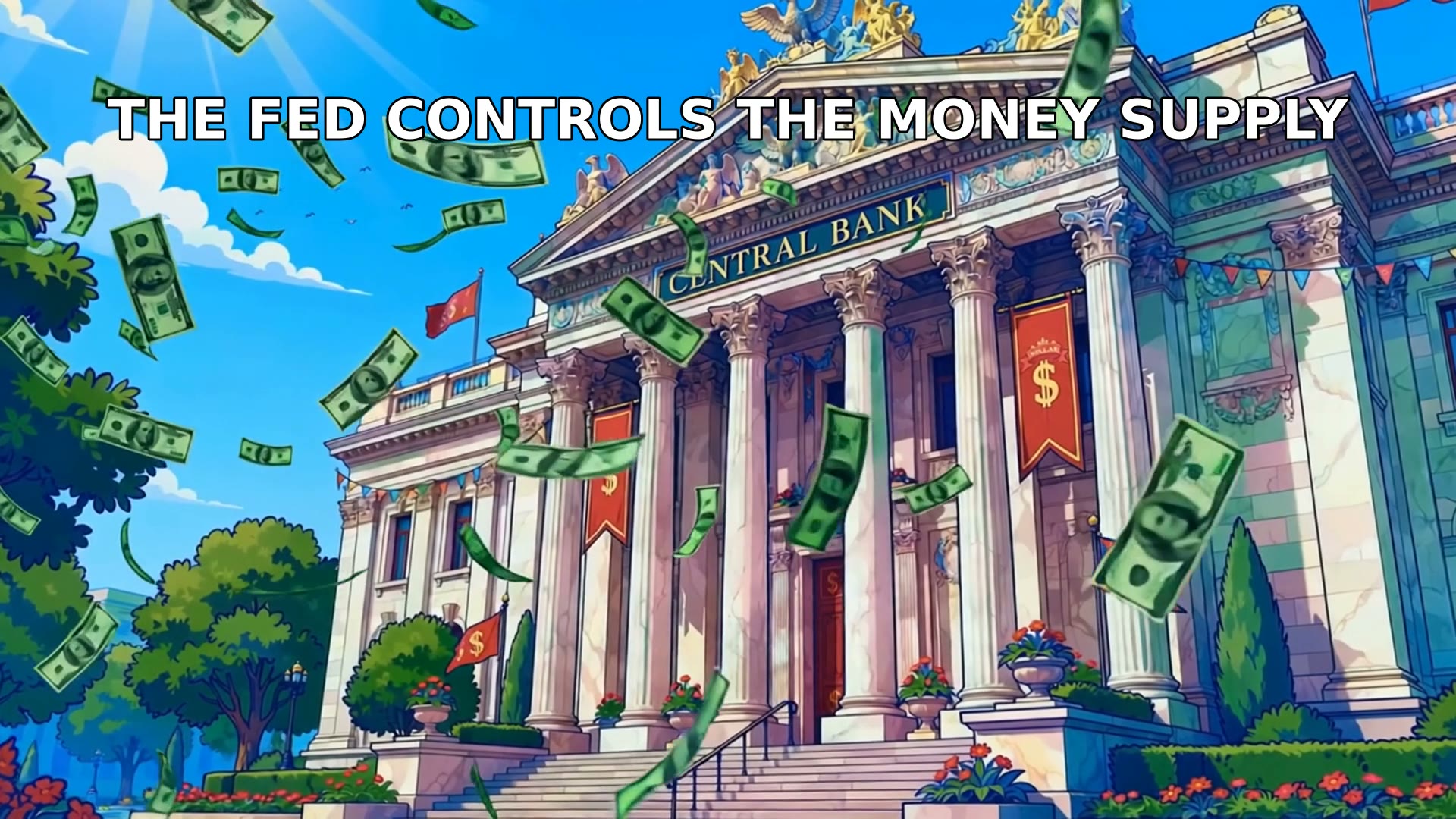
The Federal Reserve controls how much money floats around in the United States. In the next few minutes, you will understand exactly what it does, and why every investor hangs on its every word.
What it is
The Federal Reserve, or the Fed, is the central bank of the United States. As the central bank, it sets the nation's monetary policy. That is a fancy way of saying the Fed controls how much money is out there in the economy, ready to be spent on goods and services.
And by controlling the money supply, the Fed influences two big things: interest rates, and the health of the overall economy.
The dual mandate
The Fed has one main goal: keep two numbers in check. Unemployment and inflation. Too many people out of work is bad. Prices rising too fast is bad. The Fed's job is to balance the two.
The main tool: the federal funds rate
The Fed has a few tools, but its primary one is the federal funds rate. Banks have to keep a certain amount of cash on hand to cover withdrawals. If a bank comes up short one evening, it picks up the phone, calls another bank, and borrows money overnight.
The Fed influences the interest rate on that bank-to-bank borrowing. And that one rate ripples outward through the whole system. Banks make their profit by borrowing money at one rate and lending it out at a higher rate. So when the Fed pushes the borrowing rate up, banks raise the rates they charge their customers. Mortgages, car loans, credit cards, all of it follows.
Stepping on the gas
Say the economy starts slowing down. The Fed lowers rates. Now borrowing is cheaper, and saving is less rewarding. People borrow more and spend more. Businesses invest more. New jobs appear. Growth picks back up. That is the Fed stepping on the gas.
Open market operations and QE
But the Fed cannot just turn a dial. To move that rate, it buys and sells government bonds. This is called open market operations. When the Fed buys bonds, it pushes money into the system and nudges rates down. When it sells, it pulls money out and nudges rates up.
After the Great Recession, the Fed went further. It started buying long-term bonds too, aiming to push down long-term rates like the ones on mortgages. That program is called quantitative easing, or QE. Lower long-term rates mean cheaper mortgages and cheaper business loans. People buy homes. Companies build factories and launch products. Those projects mean more hiring, which means more jobs.
Stepping on the brakes
But there is a trade-off. When the economy grows too fast for too long, inflation shows up. Prices start rising. To fight it, the Fed raises rates. Borrowing gets expensive. Businesses pull back on expansion. Consumers spend less. Demand cools off, and prices settle back down. That is the Fed stepping on the brakes.
Why it matters to you
So that is the Federal Reserve. It controls the money supply. It steers interest rates. And it balances jobs against inflation, using the federal funds rate and open market operations as its main levers. The next time headlines cover a Fed meeting, you will know exactly what they are deciding, and why it moves the markets.