
Market Basics: 2-3 Minute Explainers
School 03 — Investing Foundations
Listen — 15-second overview
A quick spoken preview of this class
School 3 · Investing Foundations · About 15 minutes
Before you can invest, you need a map of the territory. The stock market, the Federal Reserve, futures, and forex are the big landmarks everyone talks about — and they sound more complicated than they are. This class explains each one in two or three minutes, in plain English, as if a friend were explaining it over coffee. We will now teach you about the stock market, the Federal Reserve, futures, forex, and the two main ways investors analyze investments.
What Is the Stock Market?
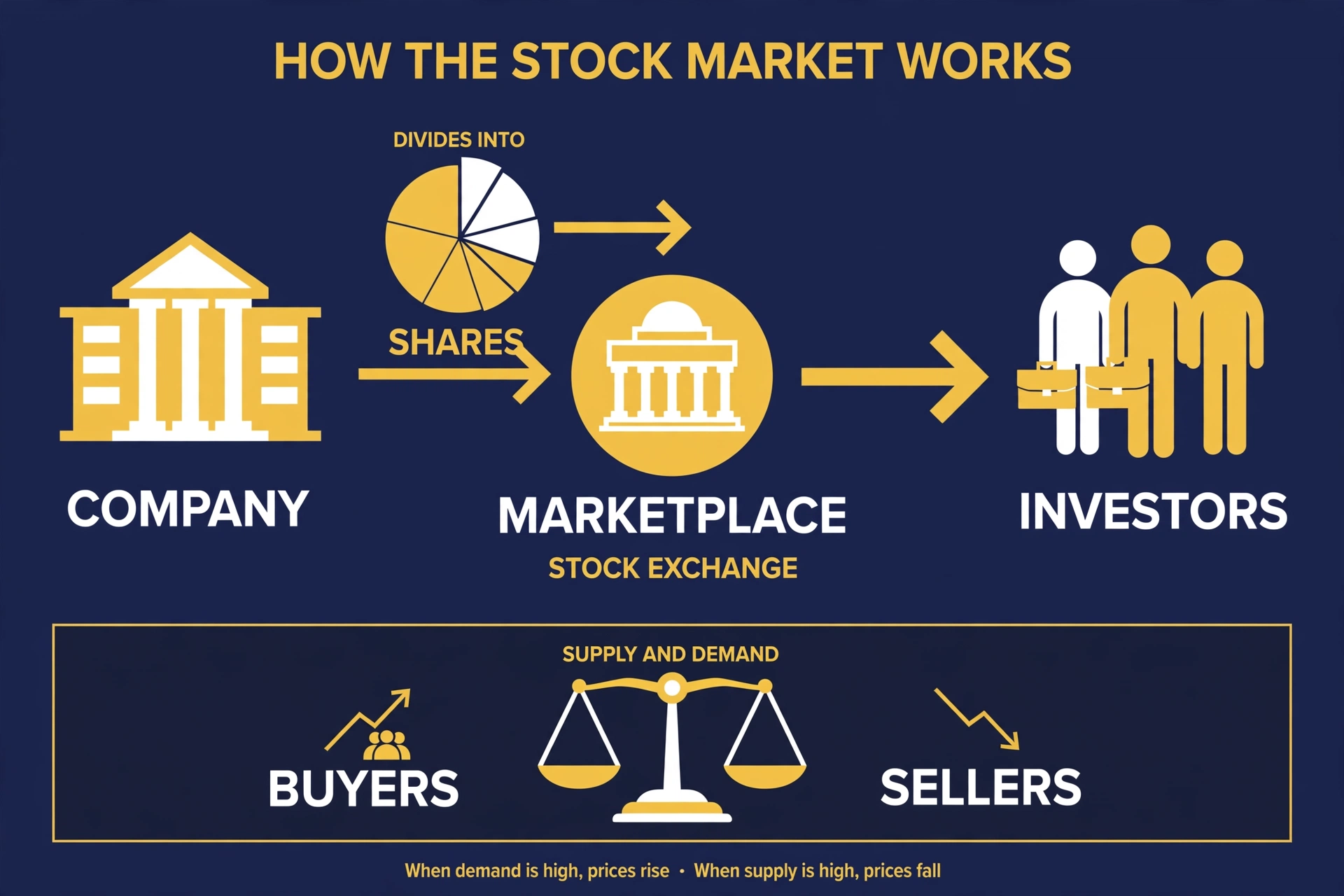
A company that wants to grow can divide its ownership into small slices called shares and sell them to the public. The stock market is simply the marketplace where those slices change hands — millions of buyers and sellers meeting every business day to trade pieces of real businesses.
When you buy a share, you become a part-owner of that company. If the business grows, earns more, and looks promising, other investors want in, and your slice can become worth more. If the business stumbles, your slice can lose value. That is the whole deal: you share in the fate of the companies you own.
Prices on any given day move because of supply and demand. When more people want to buy a stock than sell it, the price rises until sellers show up. When more people want to sell than buy, the price falls until buyers step in. Every tick up or down is just that tug-of-war playing out.
What Is the Federal Reserve?
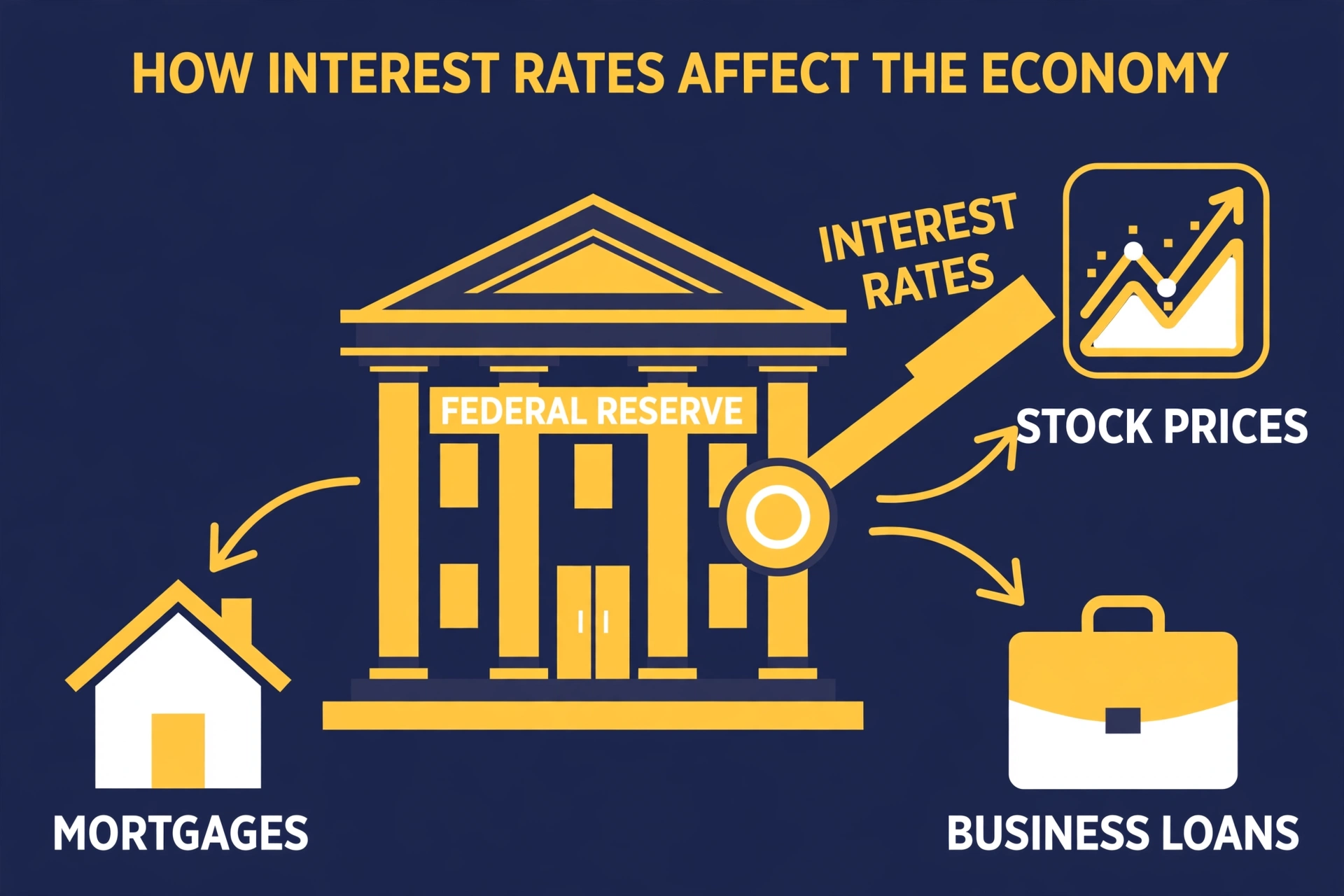
The Federal Reserve — usually just called the Fed — is the central bank of the United States. Think of it as the bank for the banks: it does not sell stocks, but it manages the money supply and sets short-term interest rates for the entire economy.
Interest rates are its main lever. When the Fed raises rates, borrowing costs more — mortgages, car loans, and business loans all get pricier, so people and companies spend and borrow less. That tends to cool the economy and can weigh on stock prices. When the Fed lowers rates, borrowing gets cheaper, spending picks up, and investors usually get more optimistic.
That is why investors hang on every Fed announcement. Its decisions ripple through savings account yields, mortgage rates, business profits, and ultimately the prices of stocks. You do not need to predict the Fed — just understand that when it moves, everything in the financial world feels it.
What Are Futures?
A futures contract is an agreement to buy or sell something — oil, wheat, gold, or a stock index — at a set price on a set date in the future. The key word is agreement: both sides lock in the price today, and the deal settles later.
Futures were invented for real businesses, not speculators. A wheat farmer can lock in a selling price before harvest and sleep at night; a bread company can lock in its flour costs the same way. The contract protects both sides from price surprises.
Today, futures markets also attract traders who have no interest in wheat or oil — they are betting on where prices will go. Futures trade nearly around the clock, so many investors glance at them overnight and on weekends to guess where the stock market might open. One warning: futures let you control a large position with a small deposit, which means small price moves can become big losses fast. They are a professional tool, not a beginner's playground.
What Is Forex?
Forex is short for foreign exchange: the global market where currencies are traded against each other. Every trade is a pair — you are always swapping one currency for another, like dollars for euros or yen.
You have already touched this market if you have ever traveled. Converting dollars into another country's money before a trip is a tiny forex trade. Businesses do it at scale every day: a company that sells goods abroad has to convert foreign earnings back into its own currency.
Forex is the largest financial market in the world and runs around the clock on weekdays, following the sun from Asia to Europe to the Americas. Prices move on interest rates, economic news, and big events — anything that makes one country's money more or less attractive than another's.
Fundamental vs. Technical Analysis
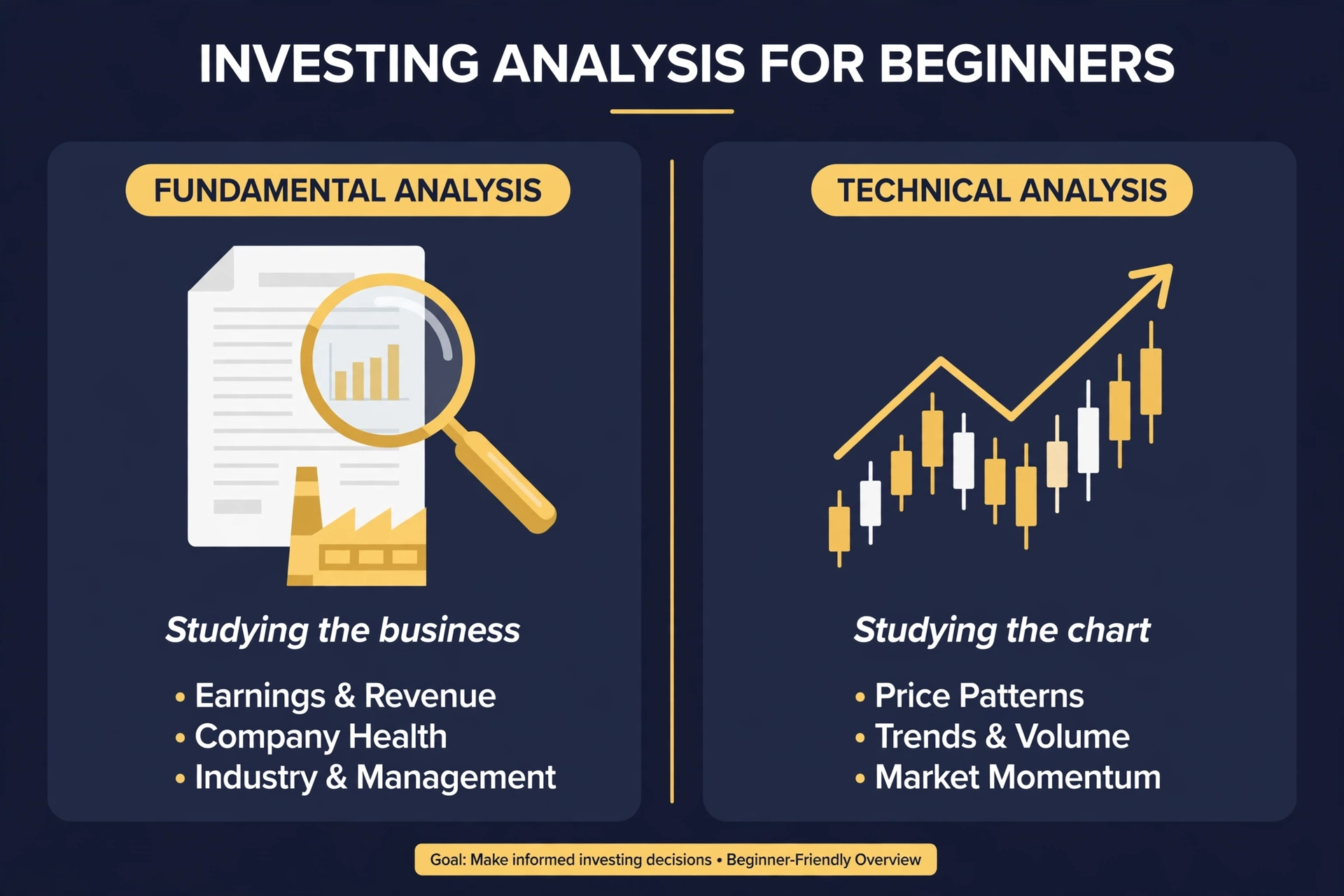
Investors use two very different lenses to make decisions. Fundamental analysis studies the business itself: its earnings, growth, debts, products, and management — anything that tells you what the company is really worth. A fundamental investor asks, "Is this a good business at a fair price?" and holds for the long run.
Technical analysis ignores the business and studies the price chart instead: trends, patterns, and trading volume. A technical investor asks, "Is the price going up or down, and when might it turn?" It is all about timing — reading the crowd's behavior as it shows up in the chart.
Neither lens is the "right" one. Many successful investors use both: fundamentals to decide what is worth owning, and charts to help decide when to buy. You will develop your own mix as you learn, but knowing these two approaches gives you the vocabulary to understand almost any investing conversation.
Key terms
- Share
- a small slice of ownership in a company, bought and sold on the stock market.
- Supply and demand
- the balance of buyers and sellers that pushes prices up or down.
- Federal Reserve (the Fed)
- the central bank of the United States, which manages the money supply and sets short-term interest rates.
- Interest rate
- the cost of borrowing money; the Fed's main lever for warming or cooling the economy.
- Futures contract
- an agreement to buy or sell something at a set price on a set future date.
- Forex
- the global market where currencies are traded against each other in pairs.
- Currency pair
- two currencies traded against each other, such as dollars for euros.
- Fundamental analysis
- studying a business's earnings, growth, and finances to judge what it is worth.
- Technical analysis
- studying price charts, trends, and volume to judge market timing.
- Earnings
- a company's profits over a period, the core number fundamental investors watch.
What's next
Now that you can picture the markets themselves, it is time to learn how you actually reach them. IF-102 "Accounts, Brokers, and Orders" shows you how brokerage accounts work, the difference between cash and margin, and how to place your first orders.
The quiz
Market Basics — Quiz
3 questions · pass with 3 correct
1.When you buy a share of stock, what are you actually buying?
2.When the Federal Reserve raises interest rates, what usually happens?
3.What is the difference between fundamental analysis and technical analysis?
Recommended Tools
Hand-picked resources that fit this lesson — only ever one or two, and only when they're genuinely useful.
- Learn more
Motley Fool
Investor education and stock research to keep learning after this class.
We may earn a commission if you sign up — at no extra cost to you.