
Accounts, Brokers, and Orders
School 03 — Investing Foundations
Listen — 15-second overview
A quick spoken preview of this class
School 3 · Investing Foundations · About 15 minutes
Knowing what the markets are is only half the picture — you also need a way to reach them. That is what a brokerage account is for: it is your doorway into the market, and the choices you make when you open it shape everything that follows. We will now teach you about cash vs. margin accounts, taxable vs. tax-advantaged accounts, and the three order types every investor uses.
The Broker's Job
A broker is the middleman between you and the markets. You cannot walk onto a stock exchange and buy shares yourself — you place your orders through a brokerage firm, and it executes them for you. Modern brokers let you do all of this from a phone or computer, with tools for researching investments and tracking your money.
Opening an account is straightforward: you provide some personal information, choose what kind of account you want, and fund it by transferring money from your bank. But that choice of account type matters more than most beginners expect, so let us walk through the two big decisions you will face.
Cash vs. Margin
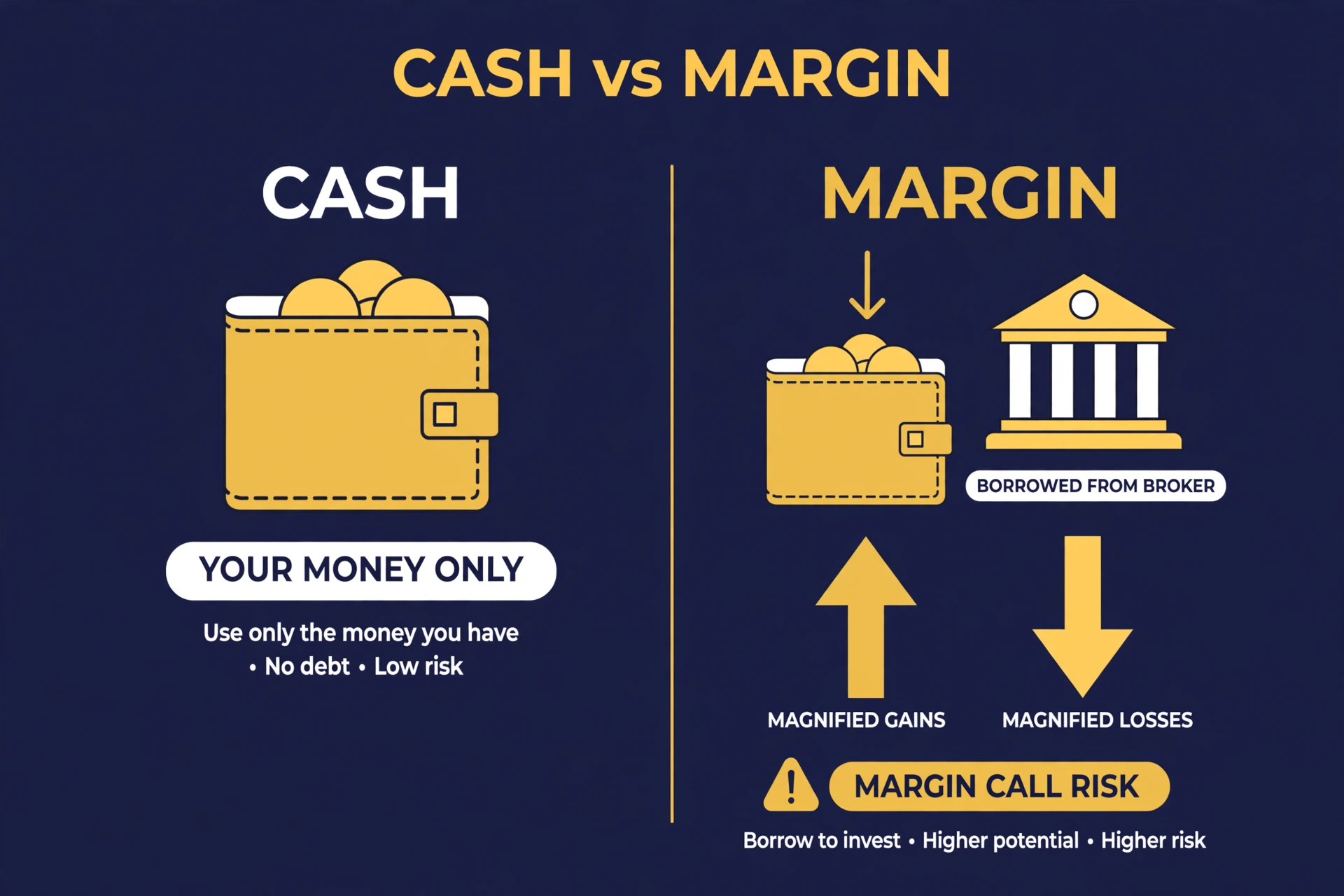
The first decision is how much buying power you want — and how much risk comes with it. A cash account is the simple option: you can only spend money you have actually deposited. If you put in $1,000, you can buy $1,000 worth of investments. You cannot lose more than you put in, and you cannot accidentally owe anyone money.
A margin account lets you borrow money from the broker to invest with. That borrowed money is called margin, and it magnifies everything: if your investments rise, your gains are bigger — but if they fall, your losses are bigger too, and you still owe the broker what you borrowed. If a borrowed trade goes badly enough, the broker can issue a margin call: a demand that you deposit more money immediately or have your positions sold off to repay the loan.
For a beginner, cash is the calmer starting point. Margin is a professional tool — powerful in experienced hands, but the kind of leverage that can wipe out an account fast if you are still learning.
Taxable vs. Tax-Advantaged Accounts
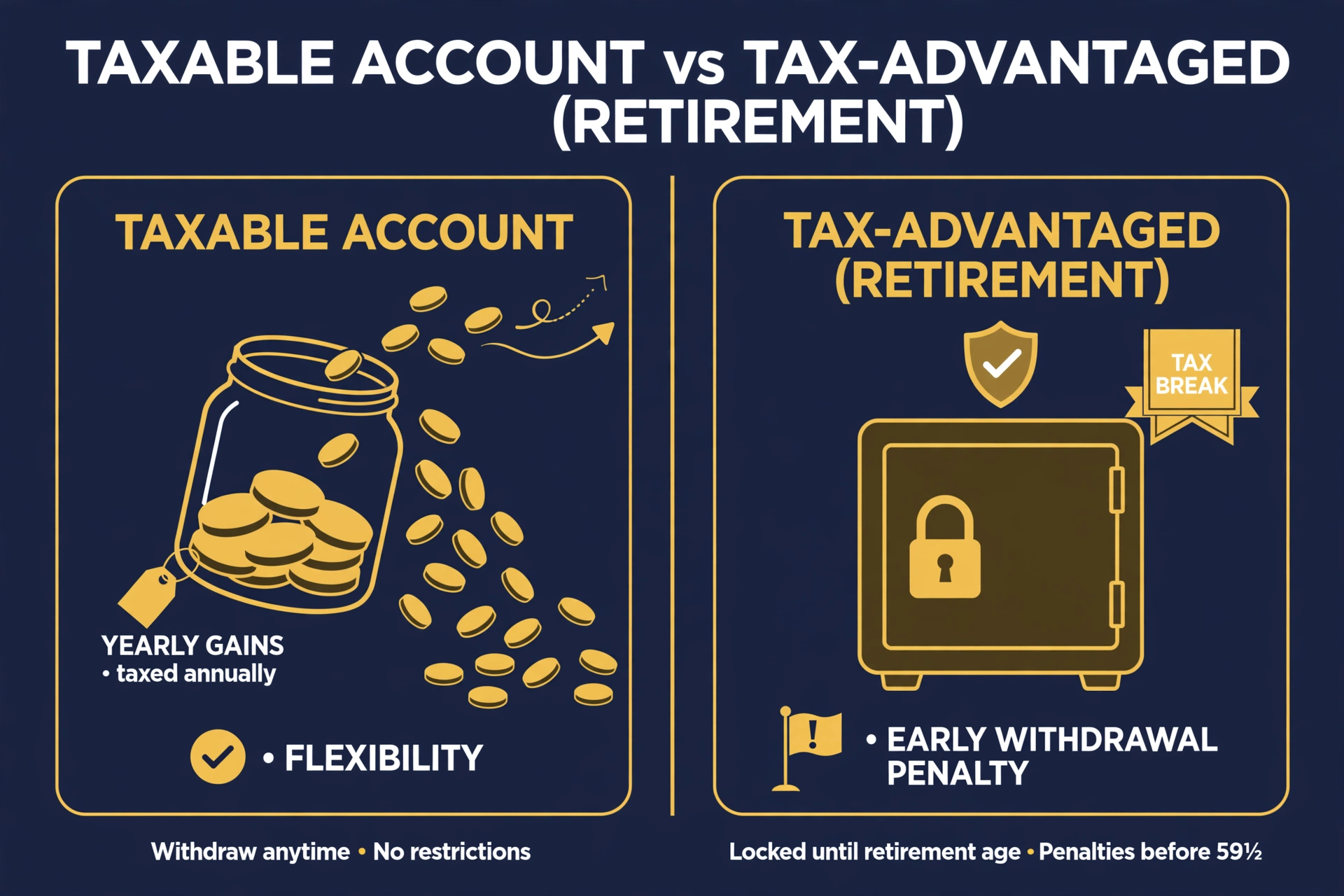
The second decision is how the account is treated for taxes. A standard taxable brokerage account is the flexible option: you can deposit any amount, buy and sell freely, and withdraw your money whenever you want. The trade-off is that you owe taxes on your gains and dividends in the year they happen.
A tax-advantaged account is designed for long-term goals like retirement, and it comes with tax breaks. The two common flavors work in opposite ways: some give you a tax break now and tax you later when you withdraw (traditional), while others are funded with money you have already paid tax on, and your withdrawals later are tax-free (Roth). The government sets limits on how much you can contribute each year.
The catch is flexibility. These accounts are meant for the distant future, so pulling money out early usually comes with taxes and penalties. That is why many people end up with both: a retirement account for the long game and a taxable account for money they might need sooner.
Market, Limit, and Stop Orders
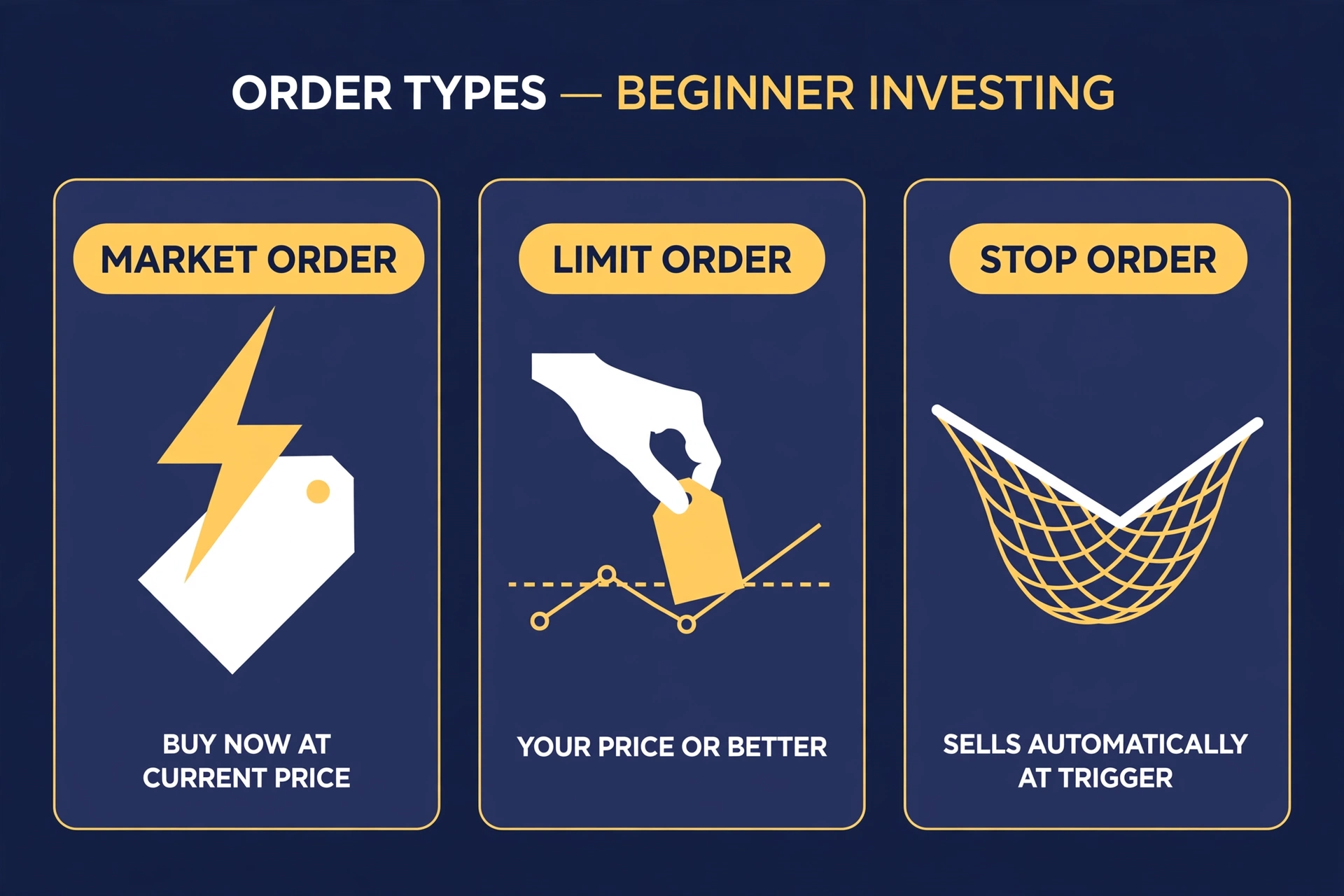
Once your account is open and funded, you buy and sell by placing orders — and there are three you need to know. A market order is the simplest: it buys or sells right now at the best price currently available. It always gets filled quickly, but on a fast-moving stock the price can shift between your click and the fill, so you might pay a little more (or receive a little less) than you expected.
A limit order puts you in control of the price. You set the exact price you are willing to pay — say, "buy at $50 or less." Your trade only happens at your price or better. The trade-off is that it might never happen at all: if the stock never dips to your price, your order sits unfilled.
A stop order is your automatic safety net. You set a trigger price — for example, "if this stock falls to $45, sell it." Once the price hits your trigger, the order activates and sells at the market price. Investors use stop orders to limit losses without staring at the screen all day: the order watches the price for you.
Key terms
- Broker
- a firm that executes your buy and sell orders, giving you access to the markets.
- Cash account
- a brokerage account where you can only invest money you have deposited; no borrowing allowed.
- Margin
- money borrowed from your broker to invest with, which magnifies both gains and losses.
- Margin account
- a brokerage account that lets you borrow from the broker to invest with.
- Margin call
- a broker's demand that you deposit more money or have positions sold when a borrowed trade goes badly.
- Taxable account
- a standard brokerage account with no contribution limits or withdrawal rules, but taxes on gains and dividends each year.
- Tax-advantaged account
- a retirement account with tax breaks and yearly contribution limits, usually penalizing early withdrawals.
- Traditional
- a retirement account flavor giving a tax break now and taxing withdrawals later.
- Roth
- a retirement account flavor funded with already-taxed money, with tax-free withdrawals later.
- Market order
- an order to buy or sell immediately at the best currently available price.
- Limit order
- an order to buy or sell only at a specified price or better; it may go unfilled.
- Stop order
- an order that activates and sells at the market price once a trigger price is reached.
What's next
You know how accounts and orders work — now comes the most important lesson of all: how risk, return, and time fit together. IF-103 "Risk, Return, and Time" shows you why higher returns always demand accepting more risk, and why time is your greatest investing ally.
The quiz
Accounts, Brokers, and Orders — Quiz
3 questions · pass with 3 correct
1.What is the main difference between a cash account and a margin account?
2.What is a margin call?
3.What does a market order do?
Ready to Start
Hand-picked resources that fit this lesson — only ever one or two, and only when they're genuinely useful.
- Learn more
Robinhood
Open your first brokerage account with commission-free trades.
- Learn more
Webull
A brokerage with powerful tools that grow with you.
We may earn a commission if you sign up — at no extra cost to you.