
Career Capital
School 02 — Earn More
Listen — 15-second overview
A quick spoken preview of this class
School 2 · Earn More · About 15 minutes
Career capital is everything you bring to an employer that is worth paying for: your skills, your credentials, and your reputation. Most people think earning more starts with asking for more, but it actually starts earlier — with knowing what you already have and making it visible. When you can name your skills, show proof of them, and present them clearly, every career move gets easier. We will now teach you about the skills inventory, market value, credentials, and career positioning.
The Skills Inventory
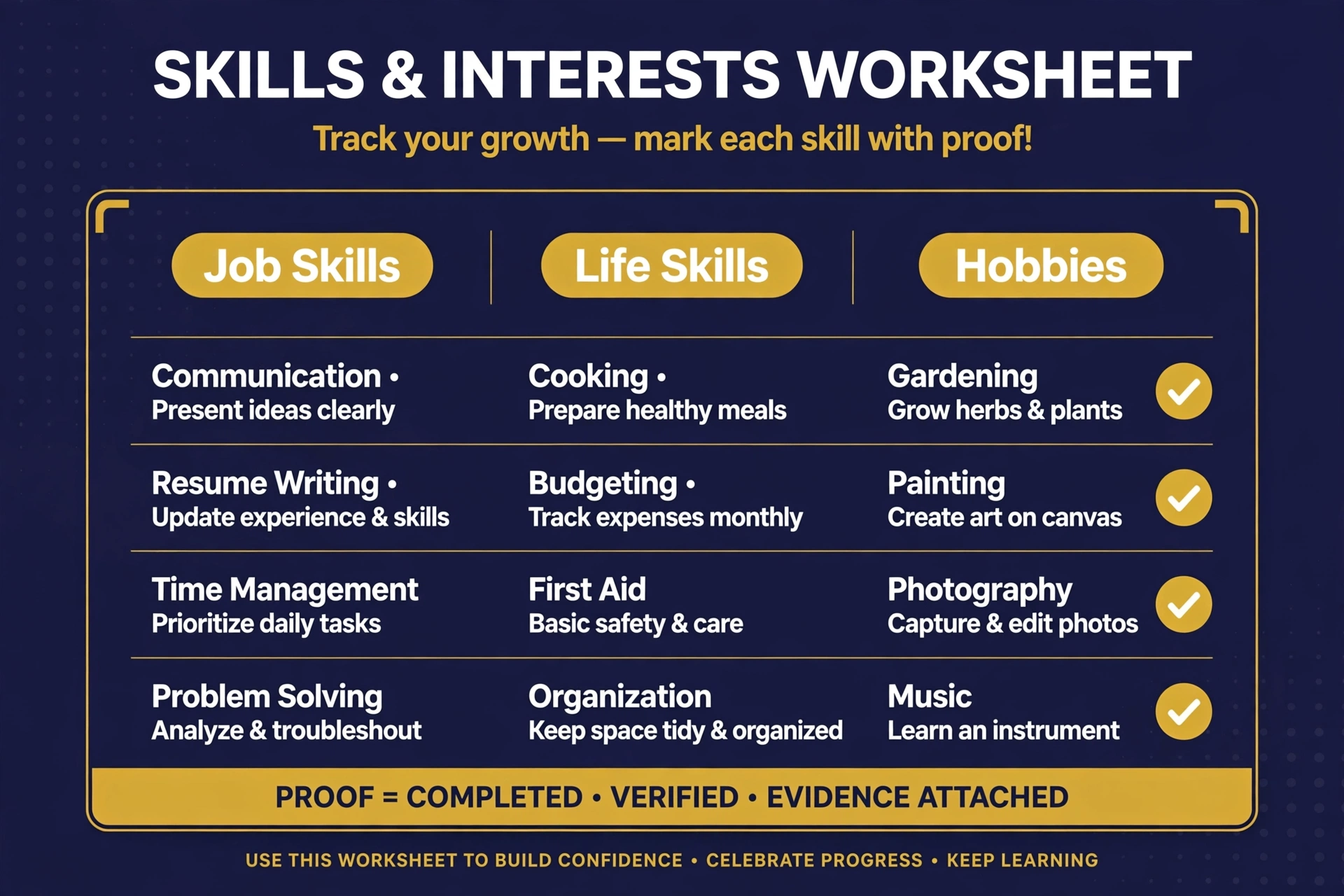
A skills inventory is a written list of everything you can do. Not a vague feeling — an actual list on paper or on screen. Start with job skills from every job you have held, then add life skills: the things you learned raising a family, volunteering, running a household, fixing things, organizing people. Add hobbies too, because hobbies often hide marketable skills — the person who edits videos for fun already has a skill employers hire for.
For each skill, write one line of proof. Proof is a specific example: what you did, where, and what came of it. "Good with people" is a claim. "Trained new cashiers at a busy grocery store for two years" is proof. Employers pay for proof, not claims, so the inventory turns "I can do things" into "here is what I have done."
Be generous with yourself here. Beginners almost always undercount. If you have ever taught someone a task, solved a problem under pressure, handled money, or finished a long project, those are skills. Write them all down first; you will sort out which ones matter most later.
Market Value
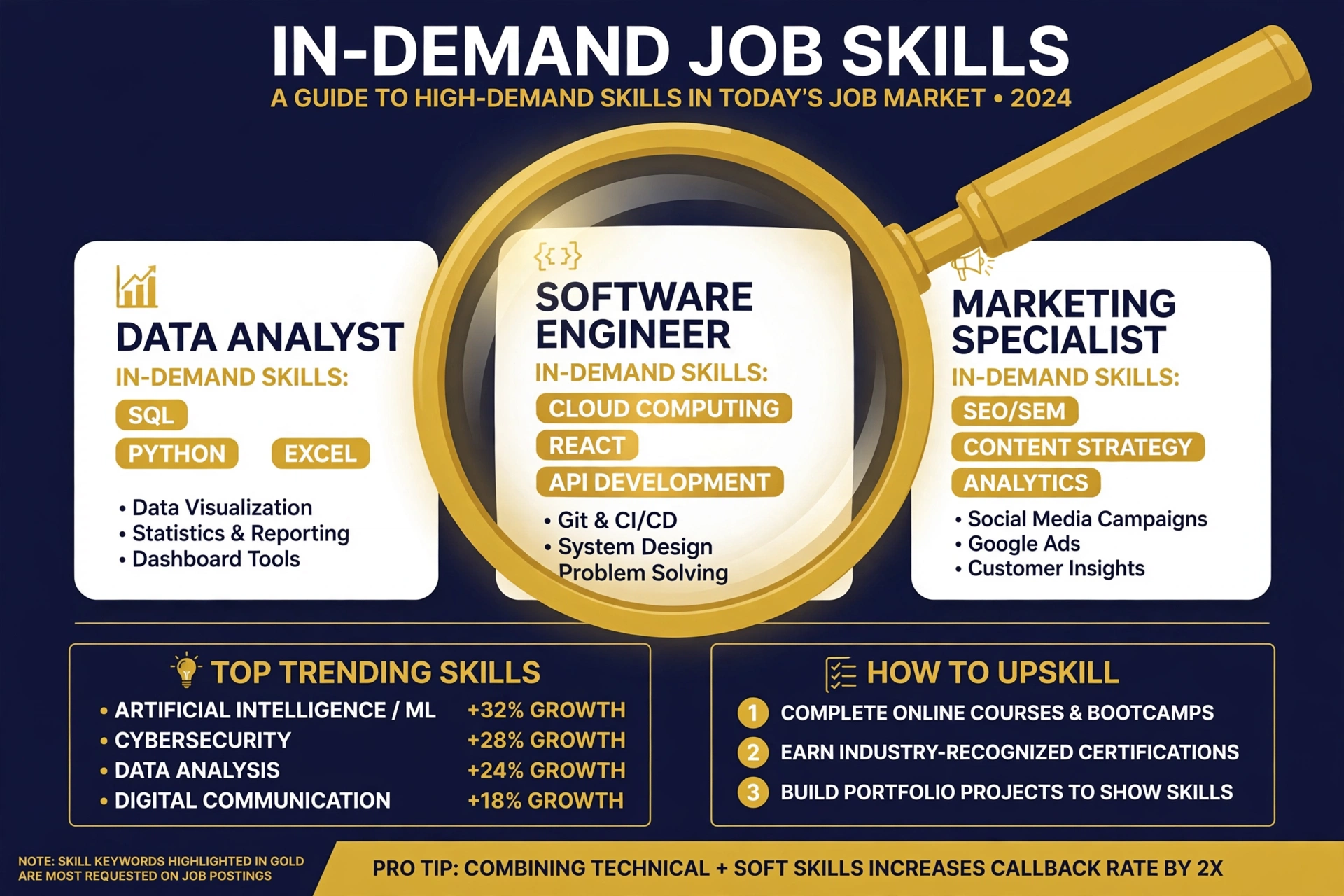
Every skill has a market value — what employers are willing to pay someone who has it. The same skill can be worth very different amounts in different places and industries, because value comes from supply and demand. When many employers need a skill and few people have it, its value rises. When a skill is common or easy to automate, its value falls.
Your job is to research, not guess. Read job postings in fields that interest you and note which skills appear again and again. Look at salary data websites to see the pay ranges attached to different roles — ranges, not promises. Talk to people who do the work and ask what skills made the biggest difference in their pay. This research tells you which of your inventoried skills are worth developing further and which new skills would raise your value the most.
Pay special attention to transferable skills. A transferable skill is one that works in many jobs — clear writing, leading a team, handling difficult customers, managing a budget. These are the skills that let you change fields without starting over, because they keep their value wherever you go.
Credentials
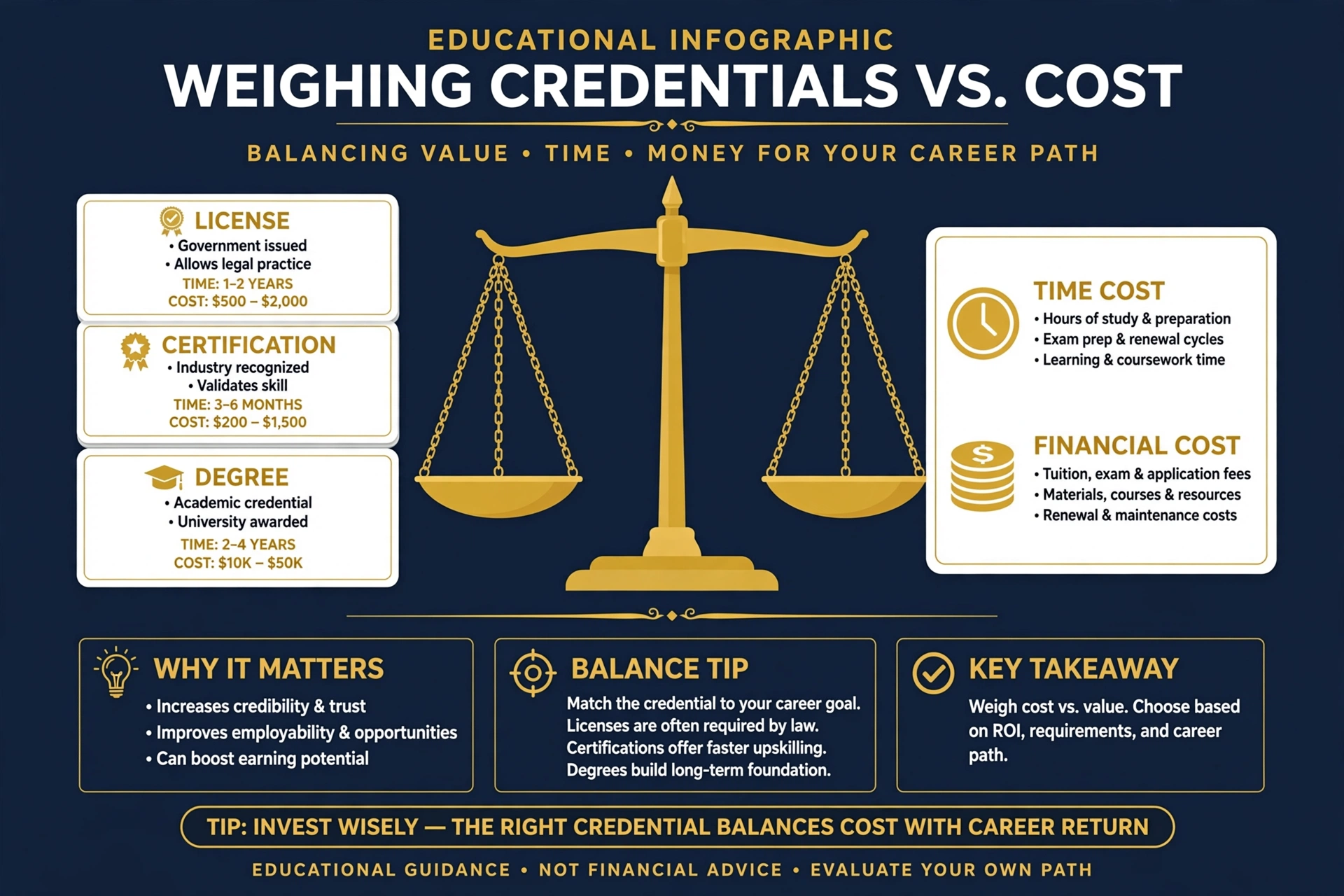
A credential is an official stamp that says you can do something: a license, a certification, or a degree. Employers use credentials as shortcuts — instead of testing your ability themselves, they trust the organization that issued the credential. That is why credentials can move pay: they remove doubt.
The three common types work differently. A license is legal permission to do regulated work — you cannot wire houses or cut hair professionally in most places without one. A certification proves you passed a standard test in a skill, like bookkeeping or network repair, and usually takes less time to earn than a degree. A degree is a multi-year program from a college that covers a broad field of study.
Each credential has a cost in time and money, and the tradeoffs are real. A license might take months of classes plus an exam. A certification might take weeks of study. A degree takes years and usually costs the most. Before pursuing one, ask three questions: Do employers in my target field actually require or reward this credential? Will the pay difference justify the time and money? And is there a cheaper or faster credential that signals the same skill? A credential is an investment, and investments deserve research — never collect credentials hoping they will magically raise your pay.
Career Positioning
Career positioning is how you present your career capital to the world so the right people can see it. You can have great skills and still be invisible. Positioning makes you findable.
It has three parts. First, your resume: one or two pages that translate your skills inventory into the language of job postings, with proof under every claim. Tailor it to each application — a resume is not a life history, it is an argument for why you fit this particular role. Second, your portfolio: samples of your work. Writers show writing, builders show photos, analysts show reports. A portfolio proves skill in a way a resume can only claim. Third, your professional presence: how you show up online and in person. Keep your public profiles consistent with your resume, share things related to your field, and treat every interaction as part of your reputation.
Positioning is not bragging. It is translation — turning what you can do into terms an employer understands in the few seconds they spend on a first look. The person who positions well does not need to be the most skilled candidate. They need to be the most clearly valuable one.

Key terms
- Career capital
- the combination of skills, credentials, and reputation that employers value and pay for.
- Skills inventory
- a written list of everything you can do, with proof for each skill.
- Market value
- what employers are willing to pay for a skill, shaped by supply and demand.
- Transferable skill
- a skill that keeps its value across many different jobs and fields.
- Credential
- an official stamp of ability, such as a license, certification, or degree.
- License
- legal permission to do regulated work, earned through required training and exams.
- Certification
- proof you passed a standard test in a specific skill, usually faster to earn than a degree.
- Portfolio
- a collection of work samples that proves your skills.
- Professional presence
- how you show up online and in person, kept consistent with your resume.
What's next
You know what you are worth and how to show it. EM-102 "Salary and Offer Negotiation" teaches you how to ask for it — researching pay ranges, using simple negotiation scripts, and comparing offers by everything they include.
---
The quiz
Build Your Career Capital — Quiz
4 questions · pass with 4 correct
1.What is career capital?
2.What belongs in a skills inventory?
3.When do credentials matter most for pay?
4.What is career positioning?