
Side-Hustle Validation
School 02 — Earn More
Listen — 15-second overview
A quick spoken preview of this class
School 2 · Earn More · About 15 minutes
Most side hustles fail, and the most expensive ones are the ones people spend months building before discovering nobody wants to pay for them. Side-hustle validation is the practice of testing an idea cheaply before you spend real money — gathering evidence that real people will pay for what you plan to sell. A validated idea is not a guaranteed income, but an unvalidated one is a gamble with your savings. We will now teach you about demand, the customer problem, startup cost, time-to-first-dollar, and stop criteria.
Demand
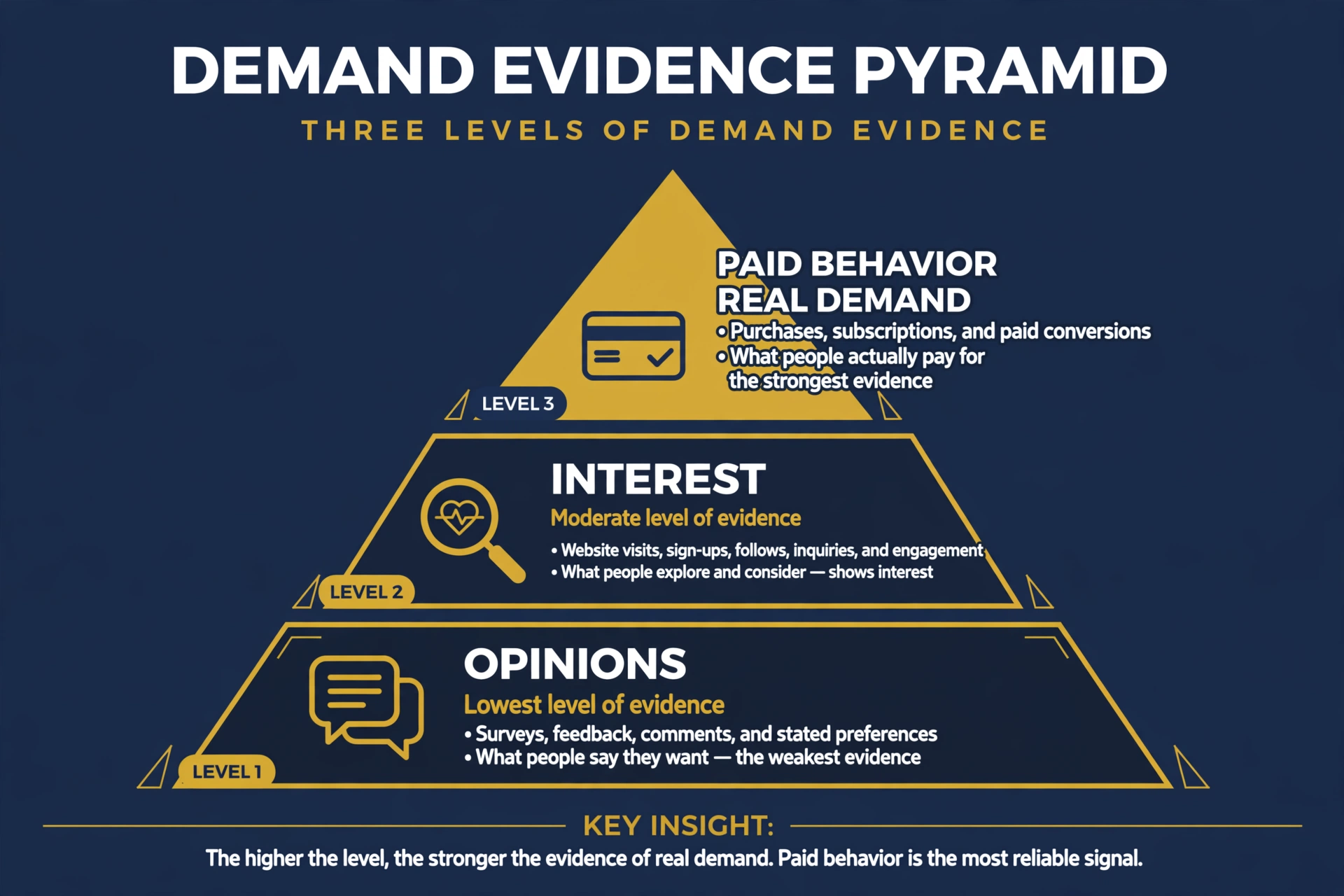
Demand means real people willing to pay for what you are thinking of selling. It is the single most important thing to check, and it is the one most beginners skip. Wanting something to exist is not demand. Friends saying "that's a cool idea" is not demand. Demand is evidence that a stranger will hand over money.
You can find that evidence without spending much. Look at what people are already paying for in the same area — if nobody is paying for anything like it, that is a warning sign, not an untapped gold mine. Search for existing competitors, because competitors mean paying customers exist. Even better, talk to people: ask about problems they have tried to solve, and listen for the ones they have already paid money to fix. Paid behavior tells you the truth that opinions never will.
The cheapest test of all is the pre-sale: offer the thing before it exists and see if anyone pays. A landing page describing the offer, a simple sign-up with a deposit, or selling to a few customers by hand before you build anything — these all produce the kind of evidence that matters.
The Customer Problem
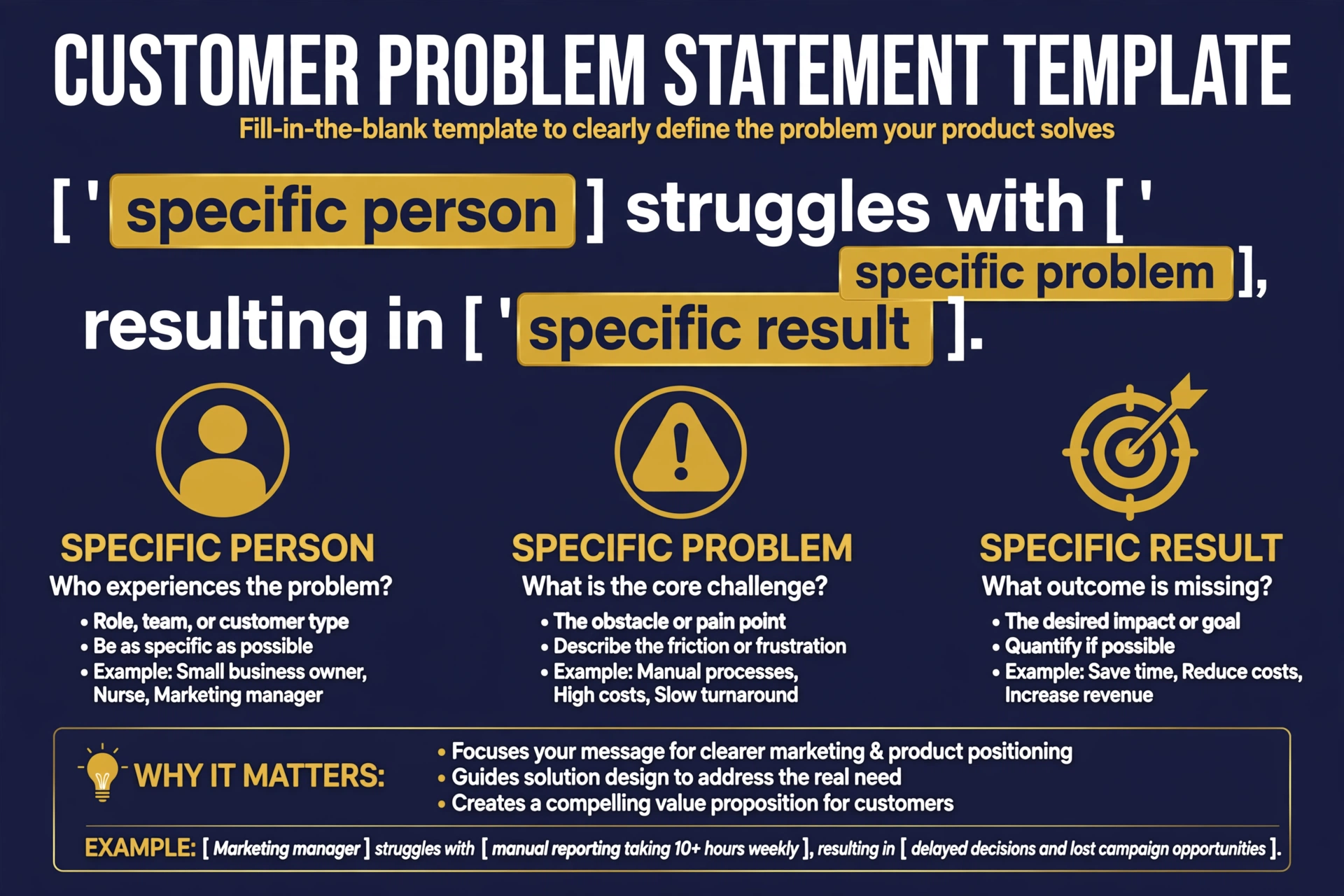
Every business that survives solves a specific problem for a specific person. If you cannot describe the customer and their problem in one or two sentences, you do not have a business idea yet — you have a wish. Write it down in plain words: "I help [specific person] who is struggling with [specific problem] to [specific result]."
Notice how narrow that is. "People who want to eat healthier" is not specific. "Busy parents who need healthy weeknight dinners ready in twenty minutes" is a real customer with a real problem. The narrower you start, the easier everything becomes: you know who to talk to, what to charge for, and whether your solution actually worked.
Then check that the problem is painful and frequent enough to pay for. People pay for problems that cost them time, money, stress, or embarrassment — and they pay most for problems that show up again and again. A problem that stings once every few years is hard to build a business around. A problem that annoys someone every week is an opportunity.
Startup Cost
Startup cost is everything you must spend before the business can take its first paying customer — equipment, supplies, fees, software, inventory, and the small costs people always forget, like delivery and packaging. Write the full list down and add it up. Ideas feel cheap until you price them out.
Then divide that cost into two kinds: money you can never get back (sunk costs like branding, a website you might abandon, inventory that expires) and money that keeps some value (tools you can resell, a camera you already own). The best validation strategy keeps sunk costs near zero, because a test that fails cheaply is a lesson, while a test that fails expensively is a setback.
This is where validation earns its name. Instead of spending the full startup cost and hoping, you spend the smallest amount that can still produce real evidence — one batch of supplies, one weekend of work, one small ad test. If the evidence is good, you spend more. If it is not, you have bought an answer instead of a loss.
Time-to-First-Dollar
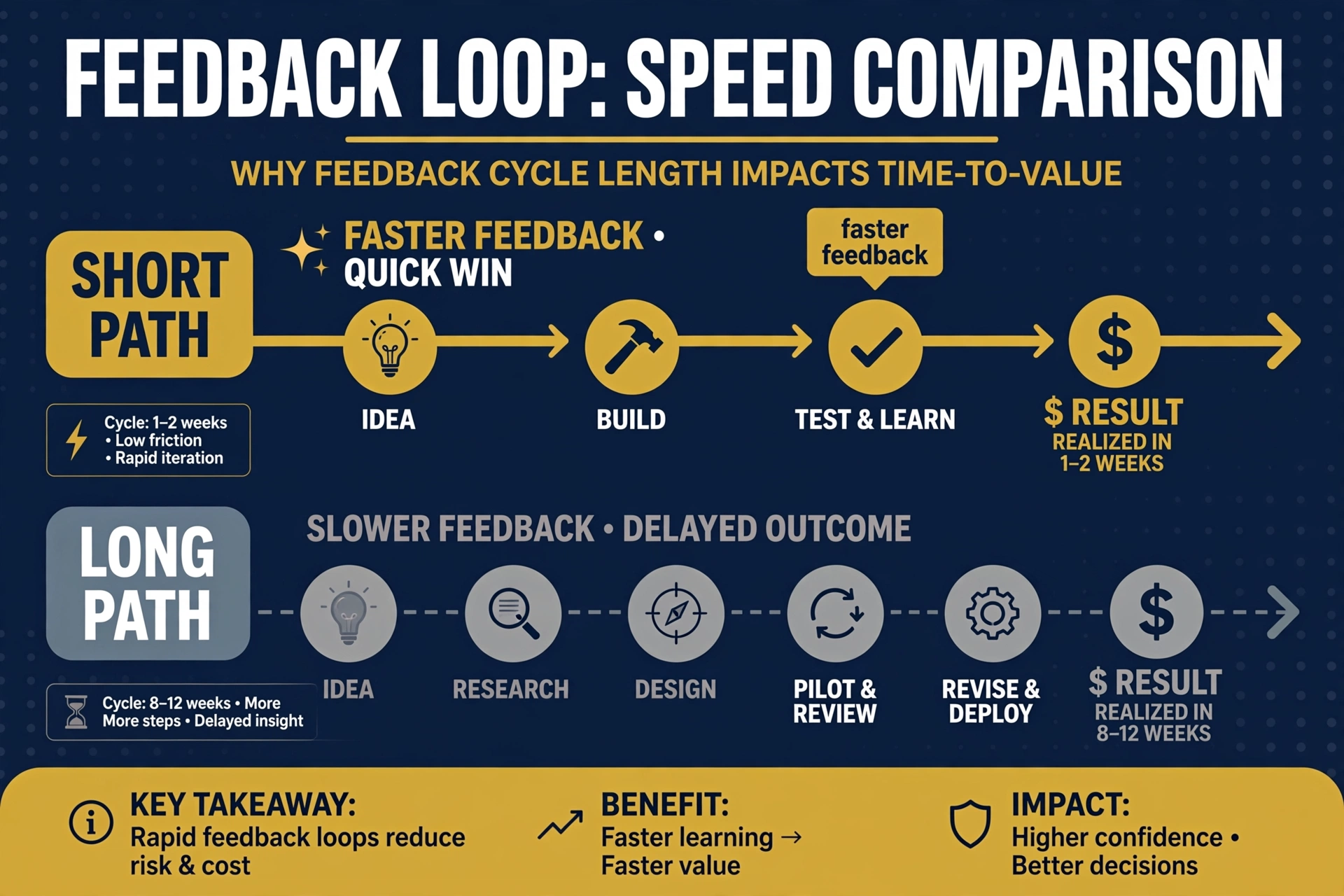
Time-to-first-dollar is how long it takes from starting an idea to receiving the first real payment from a stranger. The shorter this is, the better the idea — not because quick money is everything, but because a fast first dollar is fast feedback. You learn what works while your investment is still tiny.
Be honest when estimating it. Ask yourself: what is the very first step I can take that ends with someone paying me? Selling handmade candles at a local market this Saturday is a short time-to-first-dollar. Designing a full product line, building a brand, and opening an online store before any customer appears is a long one — and every week before that first dollar is a week you are spending without learning.
If an idea takes months before any money can come in, shrink it. Find the version of the idea that can be sold this week, in rough form, to a real customer. Rough and real beats polished and hypothetical every time.
Stop Criteria
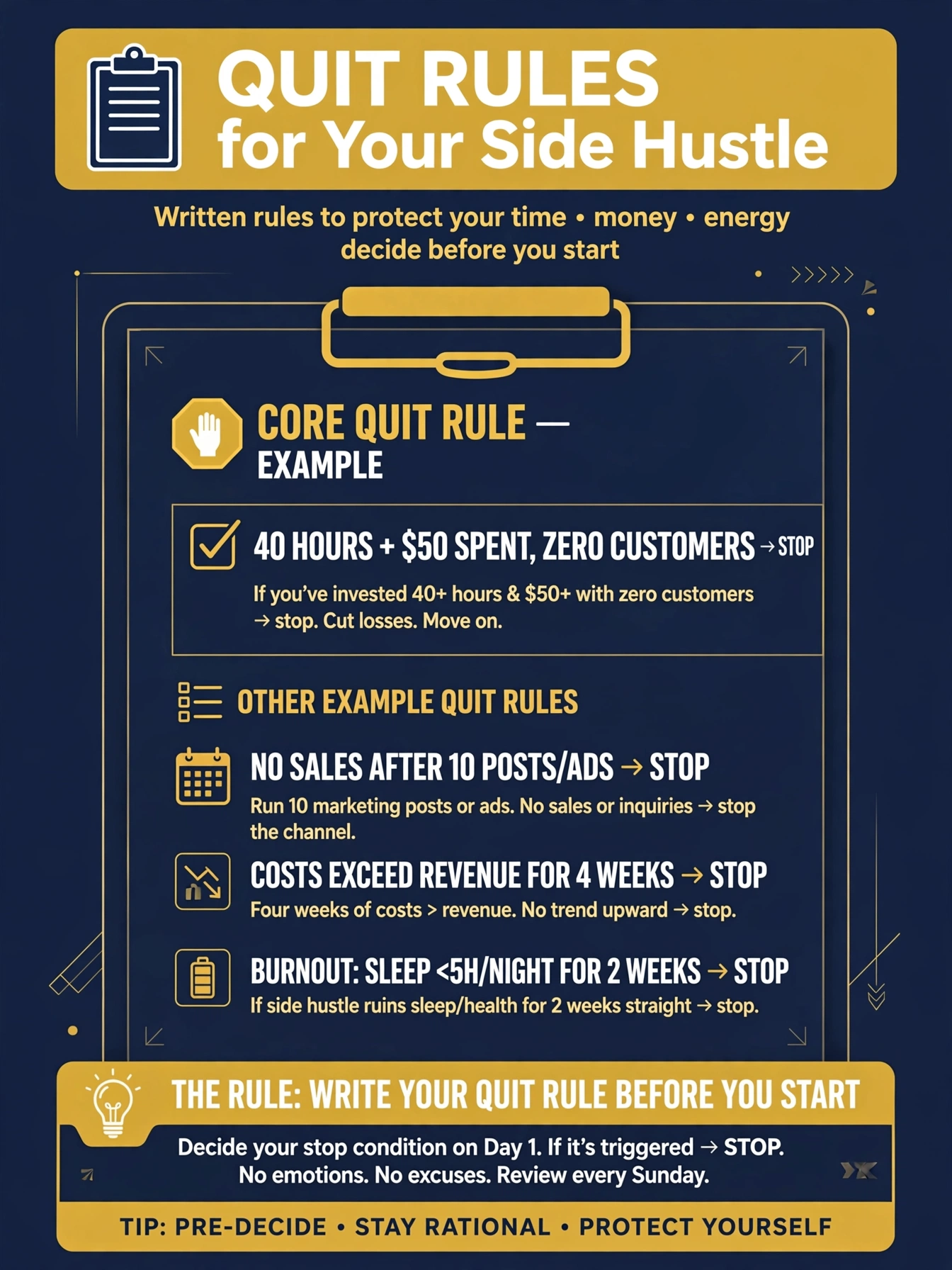
Stop criteria are rules you set in advance for when you will quit an idea that is not working. You decide them before you spend anything, while your judgment is clear — because once you have spent money and months, quitting feels like failure instead of what it is: a decision.
A good stop criterion is specific and measurable. "If I spend forty hours and fifty dollars offering this and get zero paying customers, I stop." "If three months pass without repeat business, I stop." These are pre-decided rules, not feelings. They protect you from the trap of pouring good money after bad because you have already invested so much — a trap called the sunk-cost fallacy, where past spending tricks you into future spending.
Write your stop criteria down next to your startup budget, and treat hitting them as a success. A stopped idea is not a failed person; it is a cheap education. Most ideas fail, and the people who waste the least money are the ones who decide in advance when they will walk away.
Key terms
- Demand
- evidence that real people are willing to pay for what you plan to sell, shown by paid behavior rather than opinions.
- Customer problem
- the specific problem a specific person has that your business solves, stated in one or two plain sentences.
- Startup cost
- everything you must spend before the business can take its first paying customer.
- Sunk cost
- money spent that you cannot get back, like branding or perishable inventory.
- Time-to-first-dollar
- how long it takes from starting an idea to receiving the first real payment from a stranger.
- Stop criteria
- pre-decided, specific rules for when you will quit an idea that is not working.
- Sunk-cost fallacy
- the trap of spending more money on a failing idea just because you already spent money on it.
What's next
Your idea is validated — or at least honestly tested. Now, how do you actually sell a skill to clients? EM-105 "Freelancing and Consulting" shows you how to package what you can do into a clear offer, price it, find clients, and turn one project into steady repeat business.
---
The quiz
Validate Before You Spend — Quiz
4 questions · pass with 4 correct
1.What counts as real evidence of demand for a side-hustle idea?
2.Which of these is a proper customer problem statement?
3.What is time-to-first-dollar?
4.What are stop criteria, and when should you set them?