
Freelancing and Consulting
School 02 — Earn More
Listen — 15-second overview
A quick spoken preview of this class
School 2 · Earn More · About 15 minutes
Freelancing and consulting both mean selling your skills directly to clients instead of to one employer — writing, design, bookkeeping, repairs, marketing, and hundreds of other skills can all be sold this way. The difference is mainly how you sell it: freelancers usually sell specific tasks or projects, while consultants sell advice and expertise. Either way, the challenge is the same: clients will not buy a skill, they buy a solution to a problem. We will now teach you about offer design, pricing, outreach, proposals, delivery, and repeat business.
Offer Design
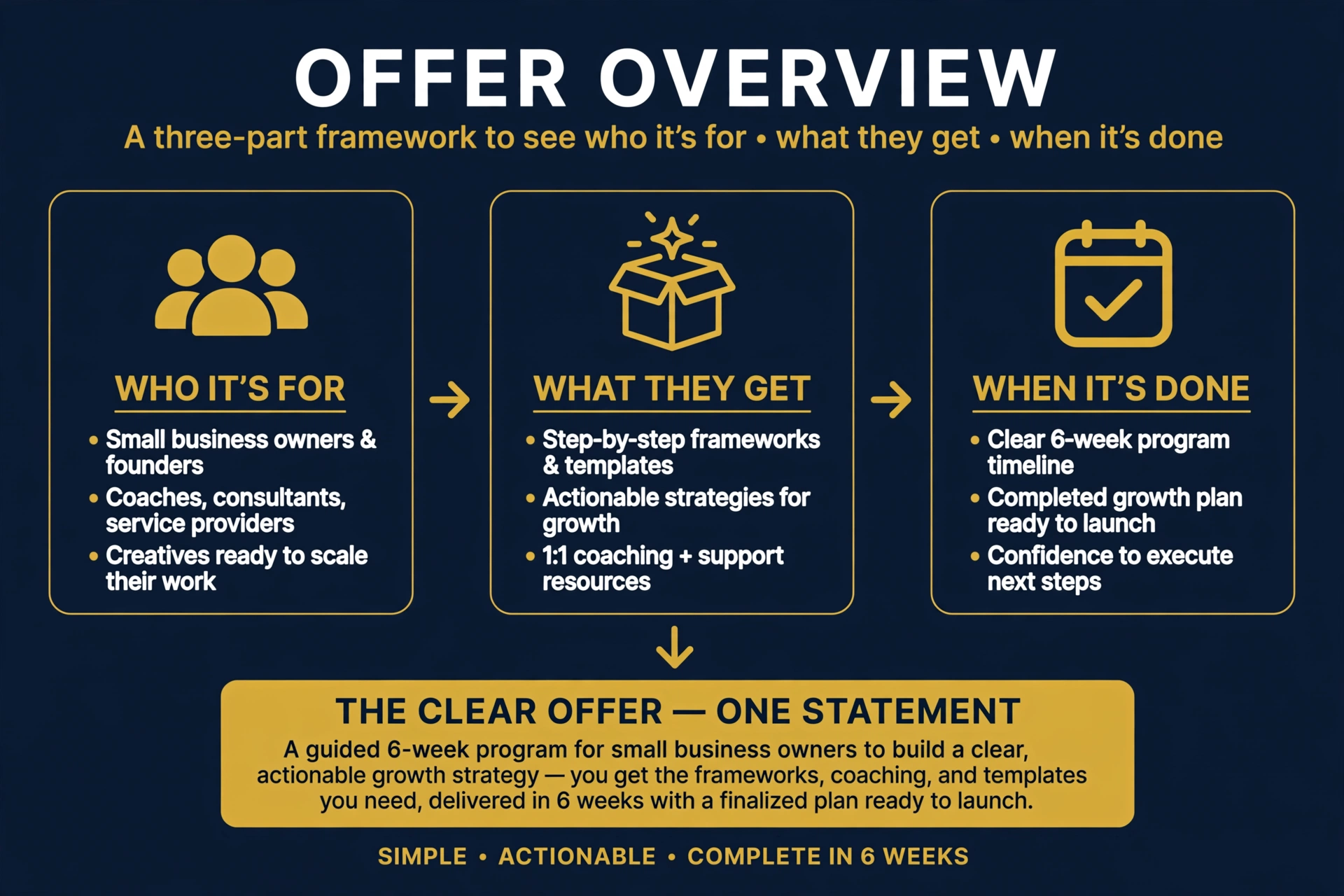
An offer is a skill packaged as a clear result the client can picture. "I do graphic design" is a skill. "I design a complete logo and brand kit for new local businesses in two weeks" is an offer — it names who it is for, what they get, and when. Clients buy offers, not skills.
Build your offer around the client, not around you. Start with their problem (from EM-104's customer problem), then describe the finished result they will hold in their hands, then say who it is for and how long it takes. Keep it to a few sentences. If a client has to ask "so what exactly do I get?", the offer is not clear enough yet.
It also helps to make the offer narrow at first. One specific service for one kind of client is easier to sell, easier to deliver well, and easier to get referrals for than "I do a bit of everything." You can widen the offer later, once clients and testimonials are coming in.
Pricing
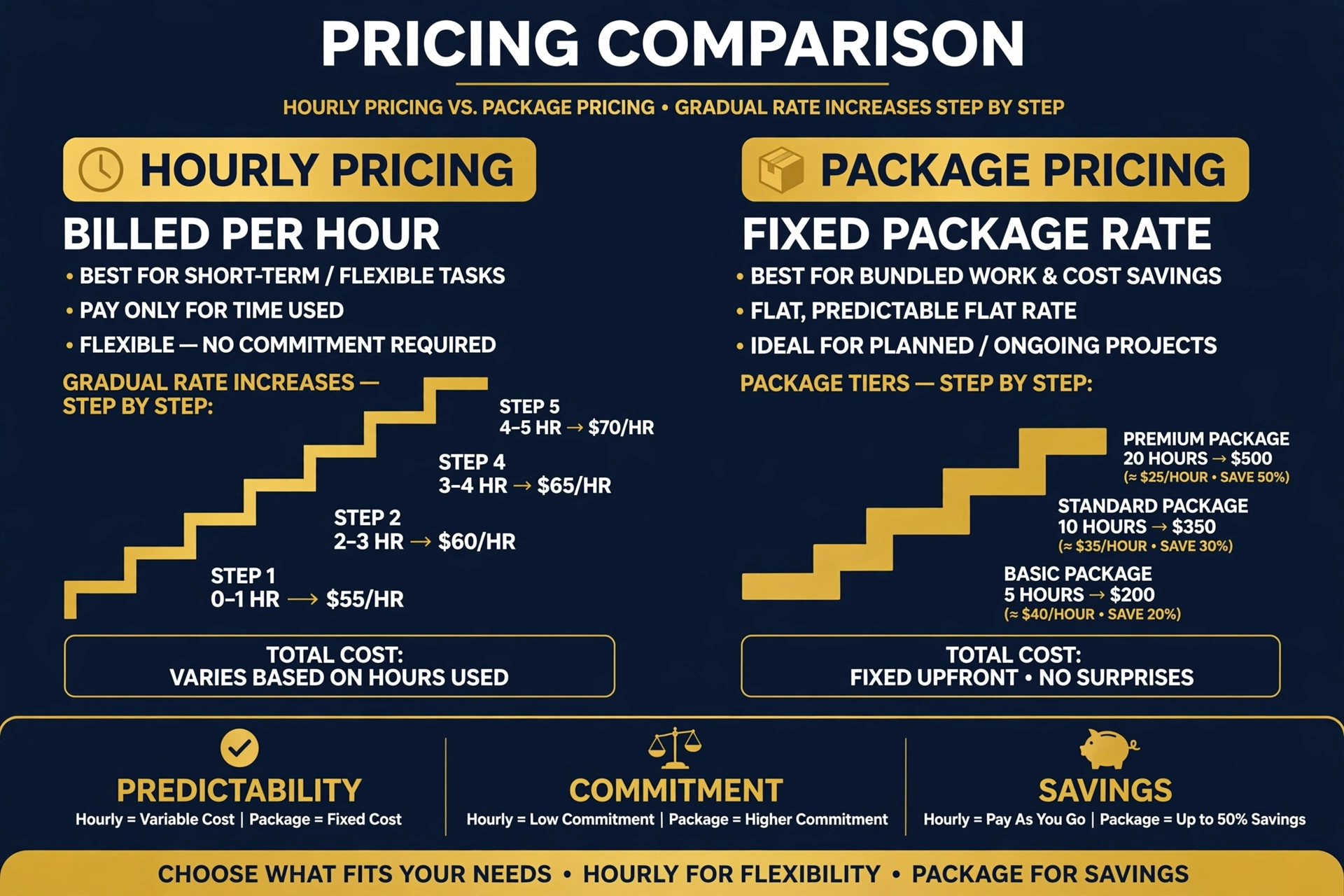
Pricing is where most beginners undercharge, and undercharging hurts in two ways: you work too many hours for too little, and cheap prices attract the clients who demand the most while paying the least. You do not need a perfect price on day one — you need a starting price you can raise as you go.
Think in value, not just time. Hourly pricing charges for your hours; value-based pricing charges for the result. A bookkeeping freelancer who saves a client ten stressful hours a month and fixes their tax mess is worth more than their hours alone — packages and project prices let you capture that. A common beginner move is to offer fixed packages ("website refresh: one price, two weeks") instead of an open-ended hourly rate, because packages are easier for clients to say yes to.
Raise your rates deliberately. Each few clients, nudge prices up a little and watch what happens. When clients keep saying yes without hesitation, your prices are probably still too low. When a few say no over price, you have found the market's edge — and "no" is useful information, not a disaster.
Outreach
Outreach is how you find clients, and it works best when it does not feel like spam. The goal is to start conversations with people who actually need what you sell — not to blast messages to everyone. One thoughtful message to the right person beats a hundred generic ones.
The simplest method is to offer something useful first. Comment on a business's website or social page with a genuine observation, share a quick tip related to their problem, or send a short note explaining one specific thing you could improve for them. You are showing your skill, not describing it. Keep messages short, personal, and honest about what you are offering.
Follow up, because most clients do not reply to the first message — they are busy, not uninterested. One polite follow-up a few days later is professional, not pushy. And track everything: who you contacted, when, and what happened. Outreach is a numbers game played patiently, and a simple list keeps you from repeating yourself or letting warm leads go cold.
Proposals
A proposal is a short written document that says: here is what I will do for you, what it costs, and when it is done. It turns a friendly conversation into a clear agreement, and it protects both sides from misunderstandings later.
Keep it simple — one or two pages is plenty for most freelance work. State the problem as the client described it (so they feel heard), list exactly what you will deliver, give the price and payment terms (for example, half up front and half on completion), and name a timeline with a delivery date. End with a clear next step: "Reply to approve and I will start Monday."
One rule to follow every time: never start significant work without an approved proposal or signed agreement, and never work without a deposit for new clients. This is not about distrust — it is how professionals work. Clients who refuse a deposit or a written agreement are telling you exactly how the project will go.
Delivery
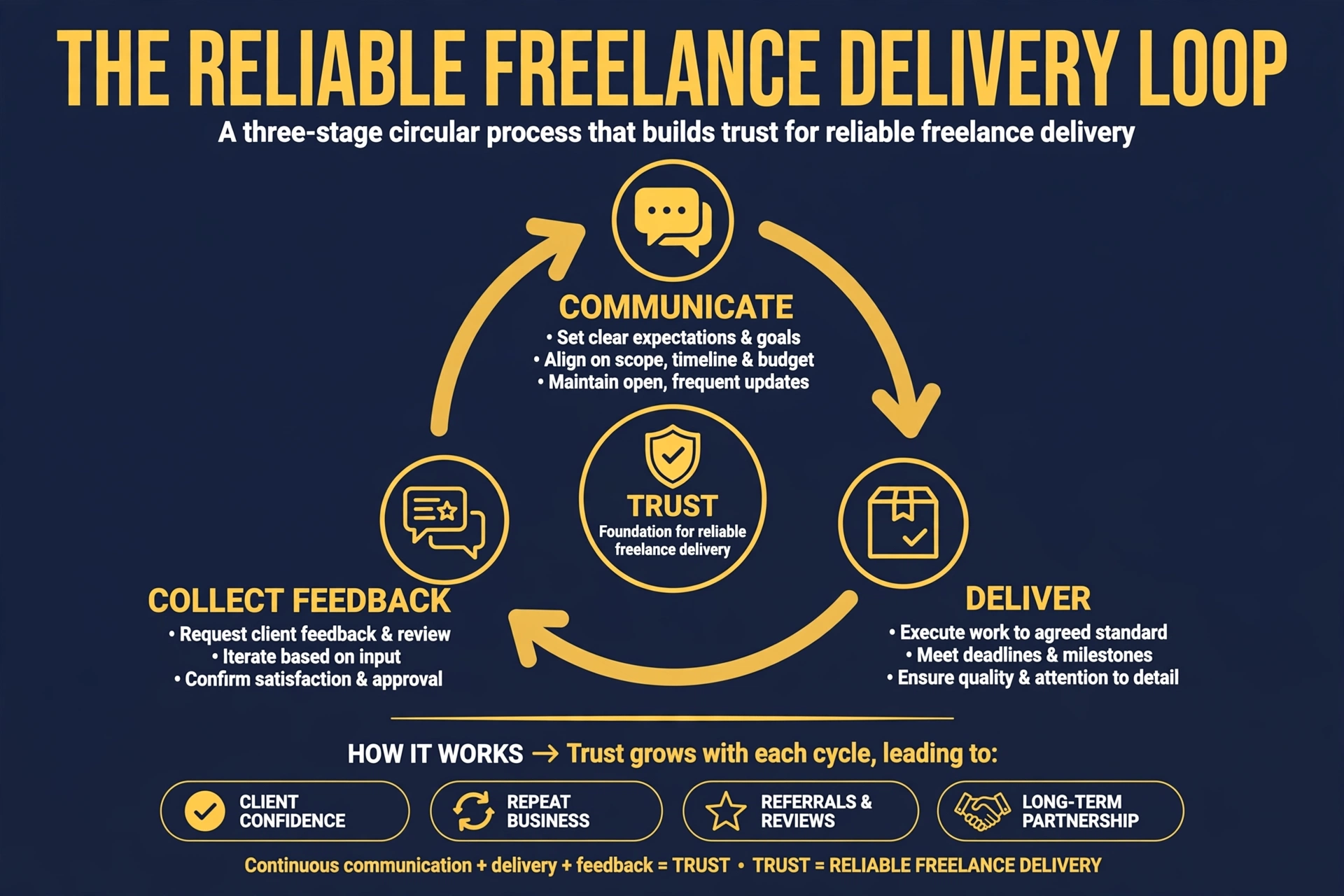
Delivery is doing the work you promised, the way you promised, when you promised — and it is where reputations are built. Talent gets you the first client; reliability gets you the tenth.
Communicate while you work. A short update when you start, a quick note halfway through, and a heads-up the moment anything slips — clients forgive delays they hear about in advance and resent silence. If you promise a date, treat it as real: deliver early when you can, and if you cannot, tell them before the deadline passes, not after.
Finish strong. Deliver the work in a clean, organized form, summarize what you did, and make it easy for the client to see the value they paid for. Then ask for two things: feedback (so you can improve) and, if they are happy, a short testimonial in their own words. Testimonials are the fuel for your next round of outreach.
Repeat Business
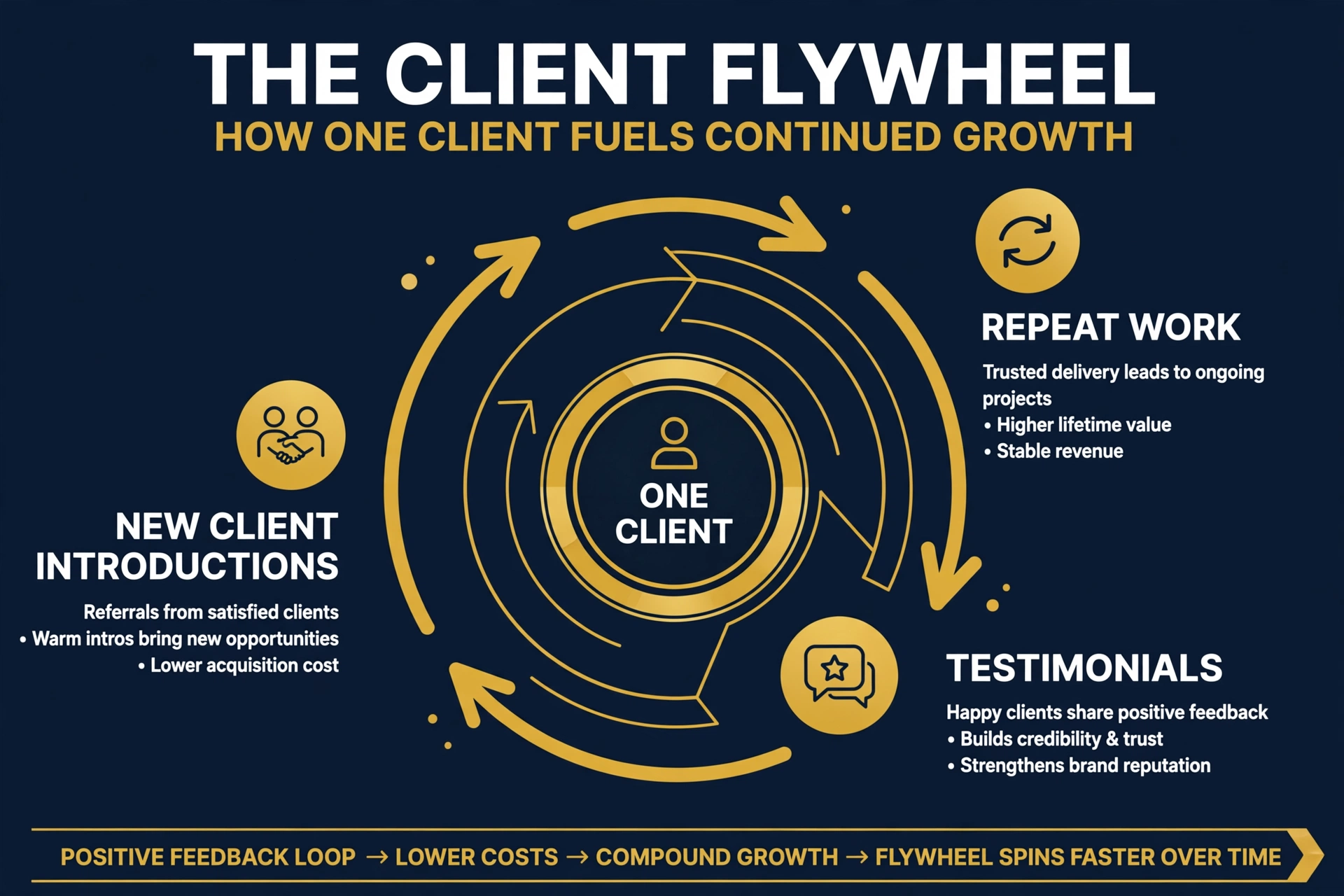
Getting a new client costs time and effort. Keeping one costs almost nothing by comparison — so the most profitable part of freelancing is turning one client into repeat business and referrals. A client who comes back is worth many times a client who buys once.
The simplest method is to stay in touch after the work ends. Check in a month later: ask how the work is holding up, share something useful related to their business, mention a new service you offer. You are not begging for work; you are being the reliable expert they already trust. People hire people they remember.
Then make referrals easy. Ask happy clients directly: "If you know anyone who could use this, I would appreciate an introduction." Most clients are glad to help — they just never think of it unless asked. A short thank-you note or a small gesture when a referral lands keeps the cycle going. Over time, referrals become the steadiest and cheapest source of new work you have.
Key terms
- Offer
- a skill packaged as a clear result for a specific client: who it is for, what they get, and when.
- Value-based pricing
- setting prices on the result and value the client receives, rather than on your hours.
- Hourly pricing
- charging for each hour worked, regardless of the result.
- Package
- a fixed-price offer with a defined deliverable and timeline, sold as one unit.
- Outreach
- contacting potential clients to start conversations about work you could do for them.
- Proposal
- a short written document stating what you will deliver, what it costs, and when, approved before work starts.
- Deposit
- an up-front payment from the client before work begins, standard practice with new clients.
- Testimonial
- a short statement from a satisfied client describing the value of your work, used to win future clients.
- Referral
- a new client introduced to you by an existing client.
What's next
You can sell a skill to clients and keep them coming back. Ready for the bigger step? EM-106 "Small-Business Foundations" shows you how to turn freelance work into a real business — the basics of structure, bookkeeping, and taxes every small business needs.
---
The quiz
Sell Your Skill — Quiz
3 questions · pass with 3 correct
1.What makes a strong freelance offer?
2.What is value-based pricing?
3.What is a proposal, and why should work not start without one?