
Estate Planning Basics
School 05 — Retirement and Long-Term Planning
Listen — 15-second overview
A quick spoken preview of this class
School 4 · Retirement and Long-Term Planning · About 15 minutes
You spent years building wealth — earning it, saving it, investing it. Estate planning is how you make sure it lands in the right hands when you are gone, and that someone you trust can step in if you ever cannot speak for yourself. Without a plan, your state's laws decide who gets what, and the process can be slow, public, and expensive. We will now teach you about wills, beneficiary designations, trusts, powers of attorney, and the legacy checklist you can complete this month.
Why an Estate Plan Matters
An estate plan is simply a set of documents that says what happens to your money, your property, and your decisions when you die or become unable to decide for yourself. It is not just for the wealthy. If you have a bank account, a retirement account, a car, or children who depend on you, you have an estate — and it needs a plan.
Here is the part most people miss: if you die without a plan, your state has already written one for you. Every state has default laws that divide your property among your closest relatives. Those laws do not know about your unmarried partner, your best friend, or the charity you cared about. They do not know who you would trust to raise your kids. They follow a formula, not your wishes.
Getting a basic plan in place is one of the cheapest, highest-impact money moves you will ever make. A simple will can cost very little, updating your beneficiary forms is free, and these few hours of effort spare your family months of paperwork, court costs, and arguing during the hardest time of their lives.
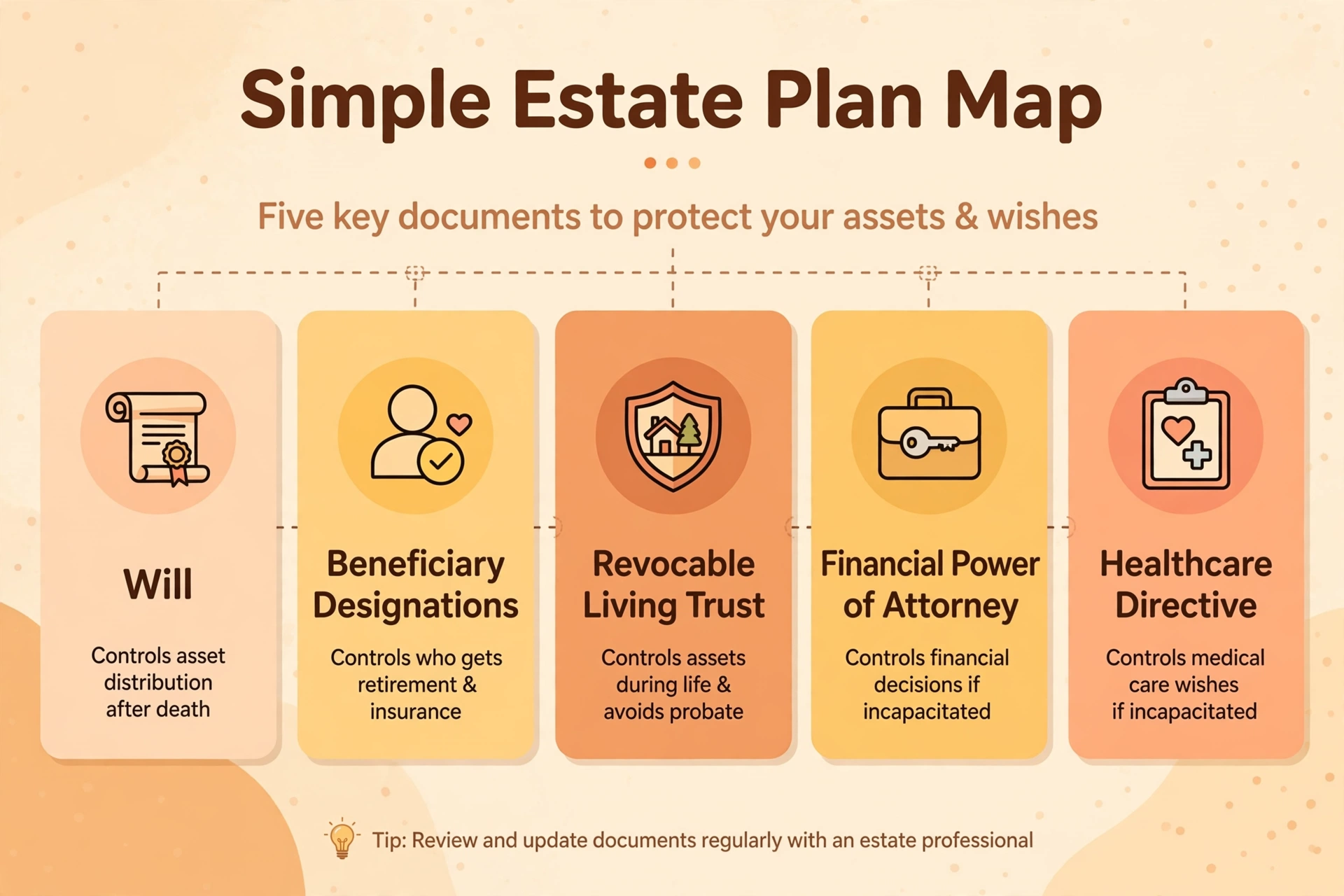
Wills: Your Written Instructions
A will is a legal document that spells out your wishes after death: who gets your property, who pays your debts, and who wraps up your affairs. Think of it as your written instructions to the court and your family. It only takes effect when you die.
The will names an executor — the person in charge of carrying out those instructions. The executor collects your assets, pays bills and taxes, and distributes what is left to the people you named. Pick someone organized and trustworthy, and tell them where the will is kept. A will locked in a secret drawer nobody can find does no one any good.
If you have minor children, the will does something no other document can: it names a guardian — the person who would raise your kids if you and the other parent are gone. Without this, a court picks the guardian. No one knows your children like you do; do not leave that choice to a judge who has never met them.
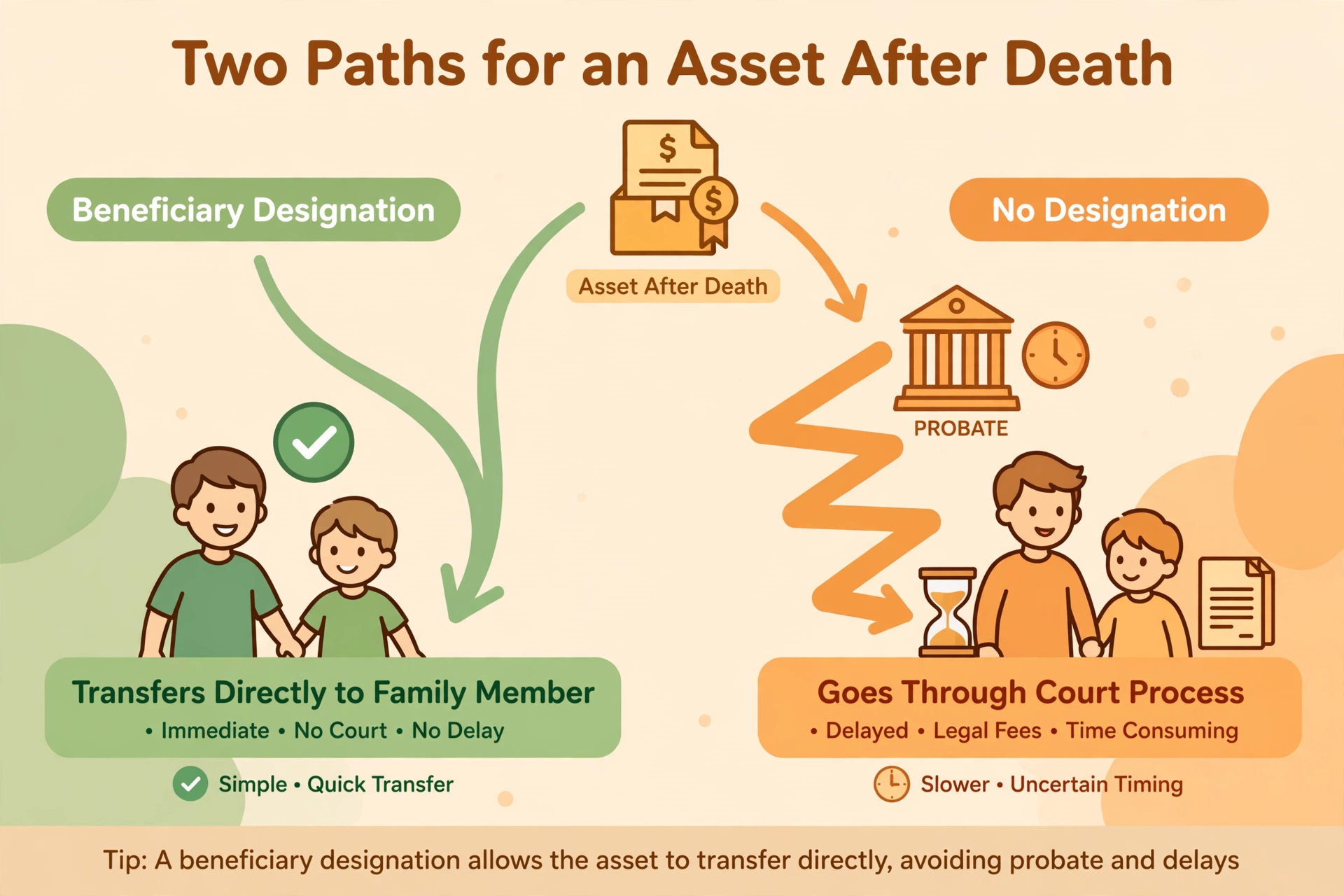
A will still goes through probate — the court process that validates the will and oversees the distribution. Probate is public, takes months, and costs money. Your will can be a good document and still pass through probate; that is exactly why the next two sections exist.
Beneficiaries: The Gotcha Everyone Misses
Here is the most important sentence in this entire lesson: a beneficiary designation — the person you name on a form to receive an account when you die — overrides your will. If your will says "everything to my spouse" but your old 401(k) still names your ex from ten years ago, the ex gets the 401(k). The form wins. Every time.
This gotcha bites hardest on retirement accounts like 401(k)s and IRAs, and on life insurance policies. These accounts pass by their designation forms, not by your will. Many people fill out these forms once on their first day of work and never look at them again — through marriage, divorce, children, and remarriage. The names on those forms may be years out of date.
So this month, pull up every retirement account and insurance policy you own and check the names. Add a contingent beneficiary too — a backup who receives the account if your primary beneficiary dies before you. It takes minutes per account, costs nothing, and it is the single highest-leverage estate-planning action most people can take.
Trusts: An Overview
A trust is a legal arrangement where one person holds property for the benefit of another. In the most common setup — a revocable living trust — you are all three roles at once. You are the grantor (the person who creates the trust and puts assets in), the trustee (the person who manages it), and the beneficiary (the person who benefits). Nothing about your daily life changes. You buy, sell, and spend exactly as before.
So why bother? Because assets owned by the trust skip probate. When you die, the person you named as successor trustee steps in and distributes the assets privately, usually in weeks, without a court, without the public record, and without most of the cost. The will tells the court what to do; the trust avoids the court entirely.
A trust does not replace a will — you still want a simple will as a backup for anything you forgot to put in the trust, and to name guardians for your children. And a trust only works if you actually move your accounts and property into it, a step people sometimes skip. The plain-English summary: a will gives instructions through the court; a revocable living trust keeps your family out of the court.
One note on taxes, kept simple: the federal estate tax only touches estates worth many millions of dollars. For the vast majority of families it is not a factor. Do not let tax worries stop you from making the basic plan.
Powers of Attorney and the Legacy Checklist
Estate planning is not only about death. A power of attorney is a document that lets someone you choose make decisions for you if you become unable to — after a stroke, an accident, or an illness. There are two kinds, and you want both.
A financial power of attorney lets your chosen person pay your bills, manage your accounts, and handle your property while you cannot. A healthcare directive — sometimes called a living will — covers medical decisions: it names who speaks to your doctors for you and records your wishes about life-sustaining treatment. Without these, your family may have to go to court just to pay your mortgage or approve your care.
Now the checklist. Do these five things this month, in order: (1) write or update your will, naming an executor and guardians; (2) review and update every beneficiary designation on retirement accounts and insurance; (3) decide whether a revocable living trust fits your situation, and talk to an estate attorney if it might; (4) sign a financial power of attorney and a healthcare directive; (5) tell your executor and your chosen decision-makers where every document is kept. That is the whole legacy plan. Your family will thank you.
Key terms
- Estate plan
- the set of documents directing what happens to your money, property, and decisions if you die or cannot decide for yourself.
- Will
- a legal document spelling out your wishes after death; takes effect only when you die.
- Executor
- the person your will names to carry out its instructions: pay debts, handle paperwork, distribute assets.
- Guardian
- the person your will names to raise your minor children if both parents are gone.
- Beneficiary designation
- the person named on an account form to receive it at your death; overrides your will.
- Contingent beneficiary
- a backup recipient, in case your primary beneficiary dies before you.
- Probate
- the public court process that validates a will and oversees distribution; slow and costly.
- Trust
- a legal arrangement where property is held by one party for the benefit of another.
- Revocable living trust
- a trust you create and control during your life; its assets skip probate at death.
- Grantor
- the person who creates a trust and places assets into it.
- Power of attorney
- a document letting someone you choose make financial or legal decisions for you if you cannot.
- Healthcare directive
- a document naming who makes your medical decisions and recording your treatment wishes; sometimes called a living will.
What's next
Estate planning protects what you built; LP-109 "Behavior and Financial Decisions" turns to the investor's own mind — the biases that quietly tax every portfolio, and the decision rules that keep them in check.
The quiz
Estate Planning Basics — Quiz
3 questions · pass with 3 correct
1.Your will says everything goes to your spouse, but your old 401(k) form still names someone else. Who gets the 401(k)?
2.Who does a will name to carry out its instructions — pay debts, handle paperwork, and distribute assets?
3.What happens to assets held in a revocable living trust when you die?