
Emergency Fund
School 01 — Money Foundations
Listen — 15-second overview
A quick spoken preview of this class
School 1 · Money Foundations · About 15 minutes
An emergency fund is cash set aside for what goes wrong. Surprises happen to everyone — the car breaks, a job disappears, a medical bill shows up. Without cash saved, a surprise becomes debt. With cash saved, it is just a bill. We will now teach you about deductibles, the starter reserve, the full emergency fund, and where emergency money lives.
Deductibles
A deductible is the amount you pay out of pocket before your insurance starts paying. It is the gap between "I have insurance" and "insurance covers this."
Think of it this way: insurance covers the catastrophe; you cover the deductible. The accident or illness is unpredictable, but the deductible is printed right in your policy.
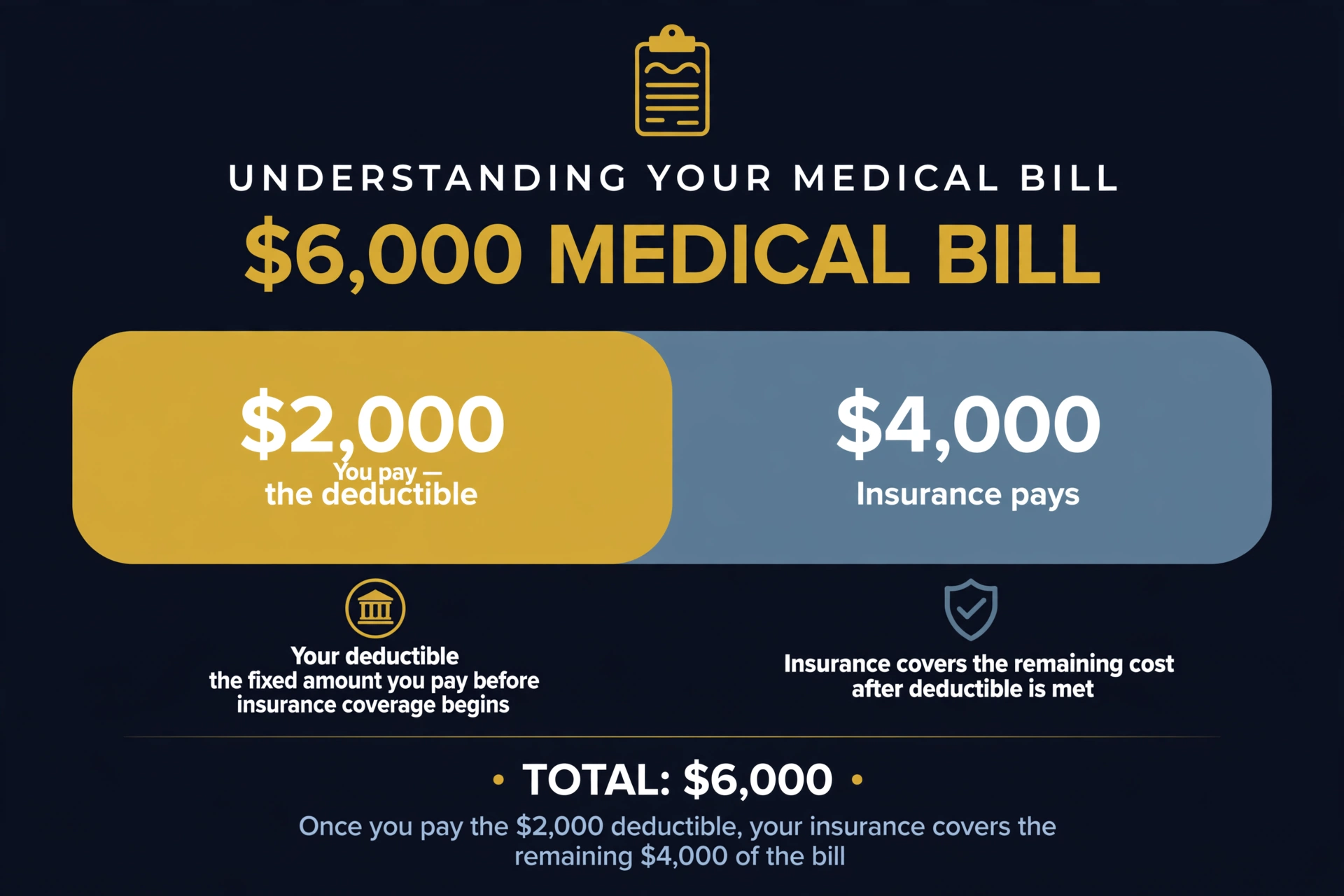
That is why emergency savings exist in the first place. If you cannot cover your deductible, your options are debt, skipped care, or both. So the first step is simple: find your deductibles. Read your health, auto, and home or renters policies, and know what you owe before insurance kicks in.
The Starter Reserve
A full emergency fund takes months to build. That big goal scares most people out of ever starting. The answer is a smaller first milestone: the starter reserve.
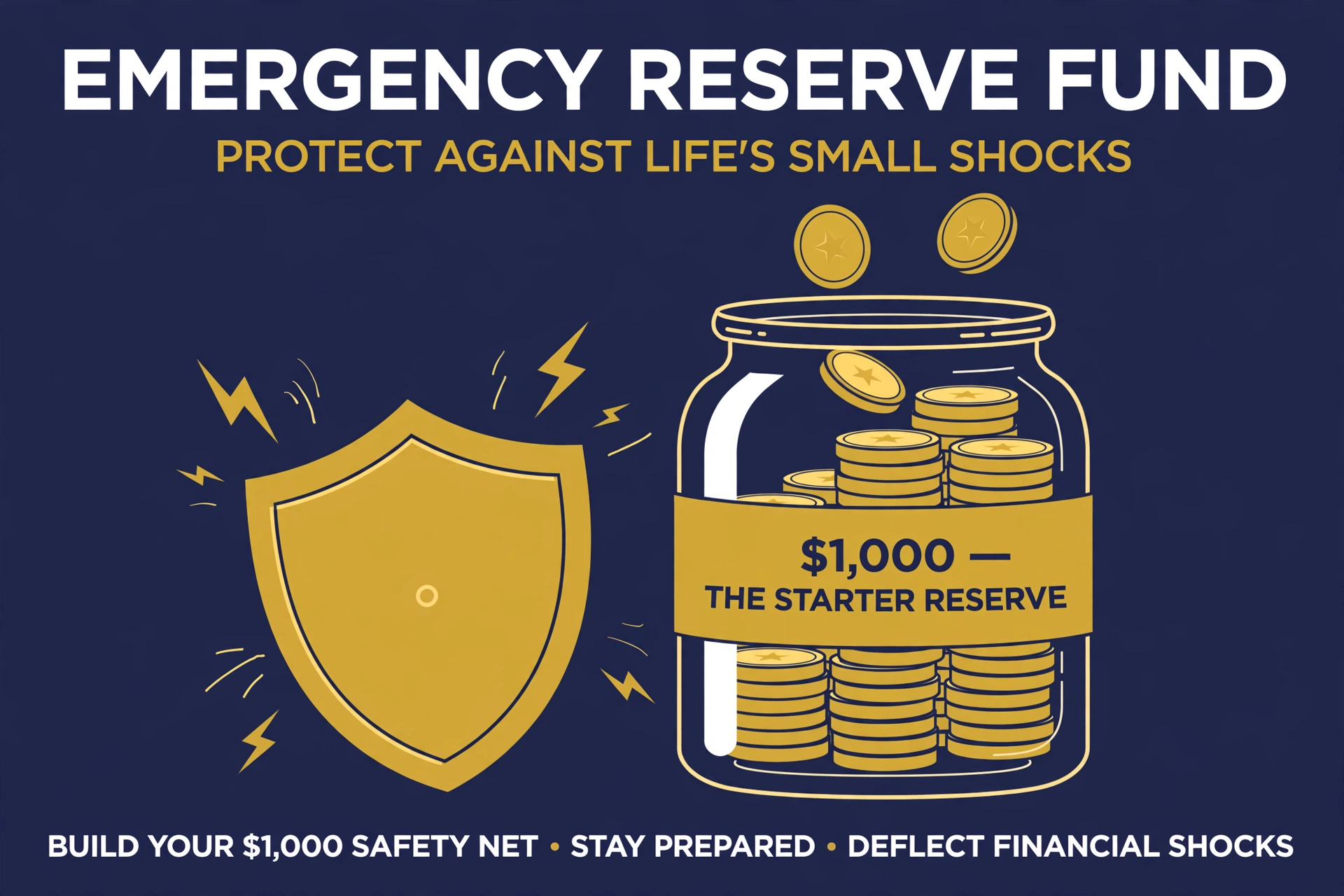
The starter reserve is a small first cushion of cash. Its only job is to absorb small shocks without a credit card — the car repair, the broken appliance, the small medical bill.
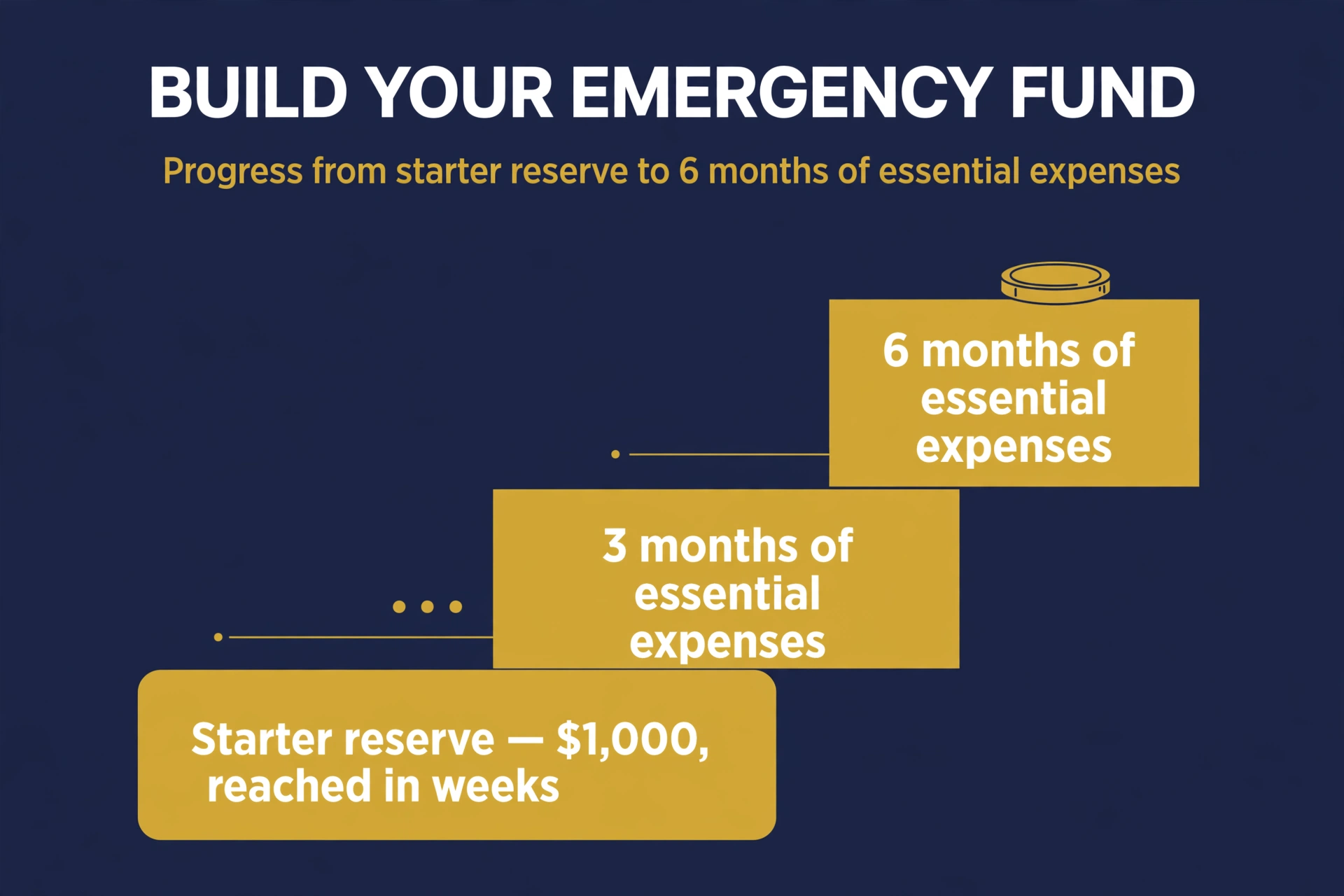
A widely used starter target is $1,000. Treat this as a convention, not a law. The real point is momentum: finish this first milestone, and you have proof you can save. That proof carries you into the next step.
The Full Emergency Fund
Once the starter reserve is done, you build the real thing: the full emergency fund. This is cash big enough to carry your household through a serious disruption — a job loss, a medical leave, a major repair.
The standard guideline used across the financial industry is three to six months of essential expenses. Essential expenses means needs only: housing, utilities, groceries, basic transport, insurance, and minimum debt payments. No restaurants, no shopping, no subscriptions — just what keeps the household running.
Where in the range should you aim? Look at your own situation. If your income is stable, the lower end of the range may be enough. If your income is unstable — self-employment, commission pay, one paycheck supporting a whole household — aim higher. More uncertainty means a bigger cushion.
Where Emergency Money Lives
Emergency money follows strict rules, or it quietly turns into spending money.
First, keep it in a separate savings account, away from your checking account. If it sits in checking, it will get spent. Distance is the feature.
Second, keep it liquid and safe. It should be reachable in a day or two — not invested in stocks, not locked up anywhere. Emergency money must be there the week you need it, no matter what the market is doing.
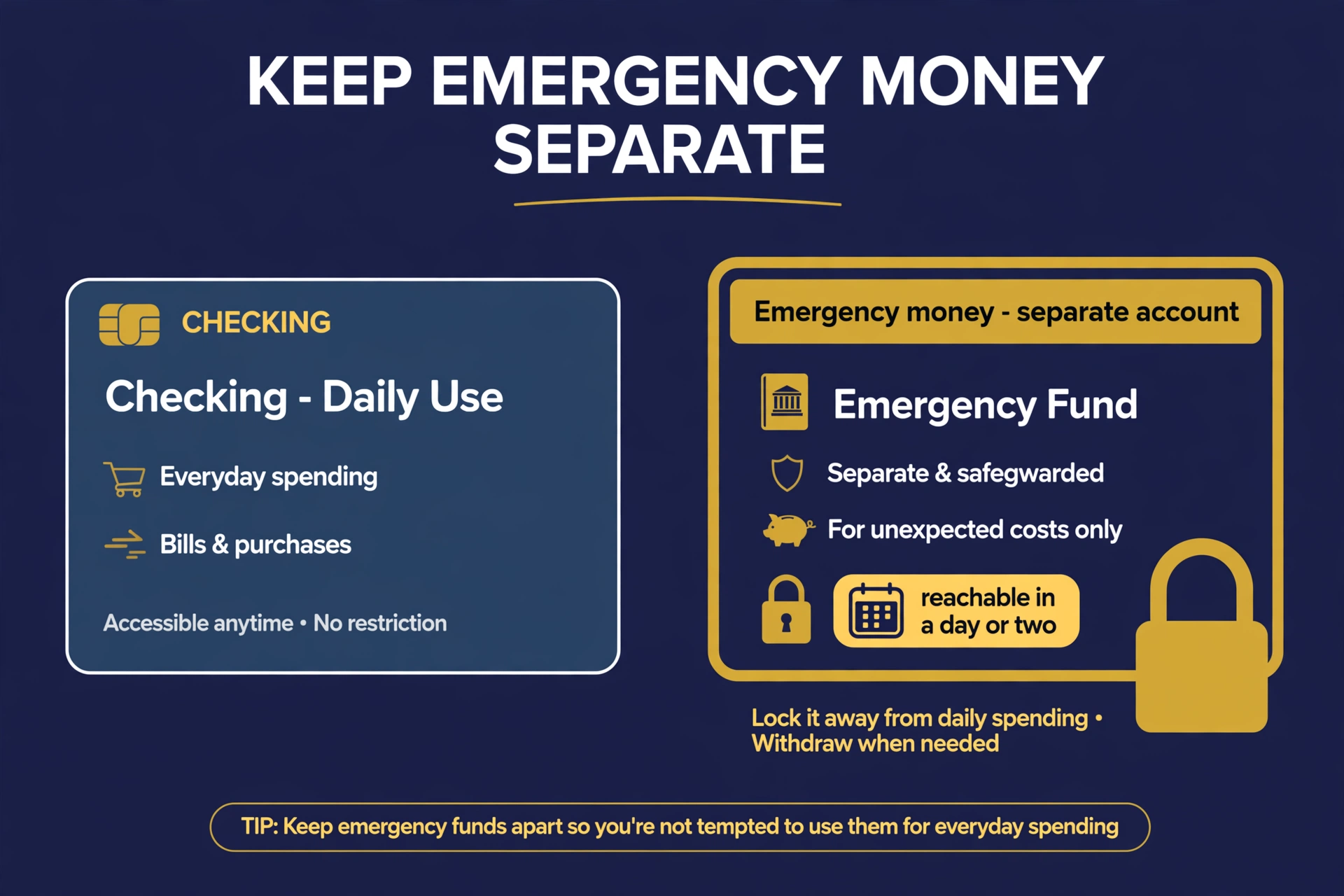
Third, it is for emergencies only: unexpected, necessary, and urgent. Job loss, a medical bill, the car repair that gets you to work. Not vacations, not sales, not "I deserve it." When in doubt, ask: is this unexpected, necessary, and urgent? All three, or it is not an emergency.
Fourth, rebuild after you use it. Spending the fund is not failure — that is what it is for. But once the emergency passes, start refilling it again. A drained fund that is never refilled is just a memory.
Key terms
- Deductible
- the amount you pay out of pocket before insurance starts paying.
- Emergency fund
- cash reserved for true emergencies; the standard guideline is 3–6 months of essential expenses.
- Starter reserve
- a small first savings milestone (a widely used target is $1,000) that absorbs small shocks while the full fund is being built.
- Essential expenses
- needs only: housing, utilities, groceries, basic transport, insurance, minimum debt payments.
- Liquid
- cash (or near-cash) you can reach in a day or two without penalty or market risk.
What's next
Your buffers are planned. Next comes Credit Without Confusion (MF-104) — credit reports, credit scores, and interest, explained in plain language.
---
The quiz
Emergency Fund — Quiz
3 questions · pass with 3 correct
1.Why must your savings be able to cover your largest insurance deductible?
2.What is the purpose of a starter reserve?
3.What is the standard guideline for sizing a full emergency fund?
Ready to Start
Hand-picked resources that fit this lesson — only ever one or two, and only when they're genuinely useful.
- Learn more
SoFi
Open a high-yield savings account for your emergency fund in minutes.
- Learn more
Bankrate
Compare high-yield savings rates across banks before you choose.
We may earn a commission if you sign up — at no extra cost to you.