
Protect the Foundation
School 01 — Money Foundations
Listen — 15-second overview
A quick spoken preview of this class
School 1 · Money Foundations · About 15 minutes
Everything you have learned so far — budgeting, saving, getting out of debt — builds your financial foundation. Insurance protects it. One serious illness, one bad crash, or one house fire can erase years of progress in a single day, and insurance is the tool that keeps a bad event from becoming a financial disaster. At its heart, insurance is a simple idea: many people each pay a small amount so that the few who suffer a big loss get help. That idea is called risk pooling, and it is the engine behind every policy you will ever buy. We will now teach you about what insurance is, the main types of insurance you will meet, how premiums, deductibles, and claims work, how to avoid insurance scams and identity fraud, and how to keep your financial documents secure.
What Insurance Actually Is
Imagine one thousand neighbors who each put one hundred dollars a month into a shared pool. Most months, nothing bad happens to most of them. But when one neighbor's house burns down, the pool pays for the rebuild — and nobody's family is ruined. That is risk pooling: spreading a huge risk across many people so no single person faces it alone.
An insurance policy is the contract that puts this idea into writing. The insurance company — called the insurer — agrees to pay for certain losses, and you agree to pay the company on a regular schedule. The contract spells out exactly what is covered, what is not covered, and how much the company will pay. Those details matter more than any sales pitch, so the golden rule of insurance is simple: read the policy before you buy it.
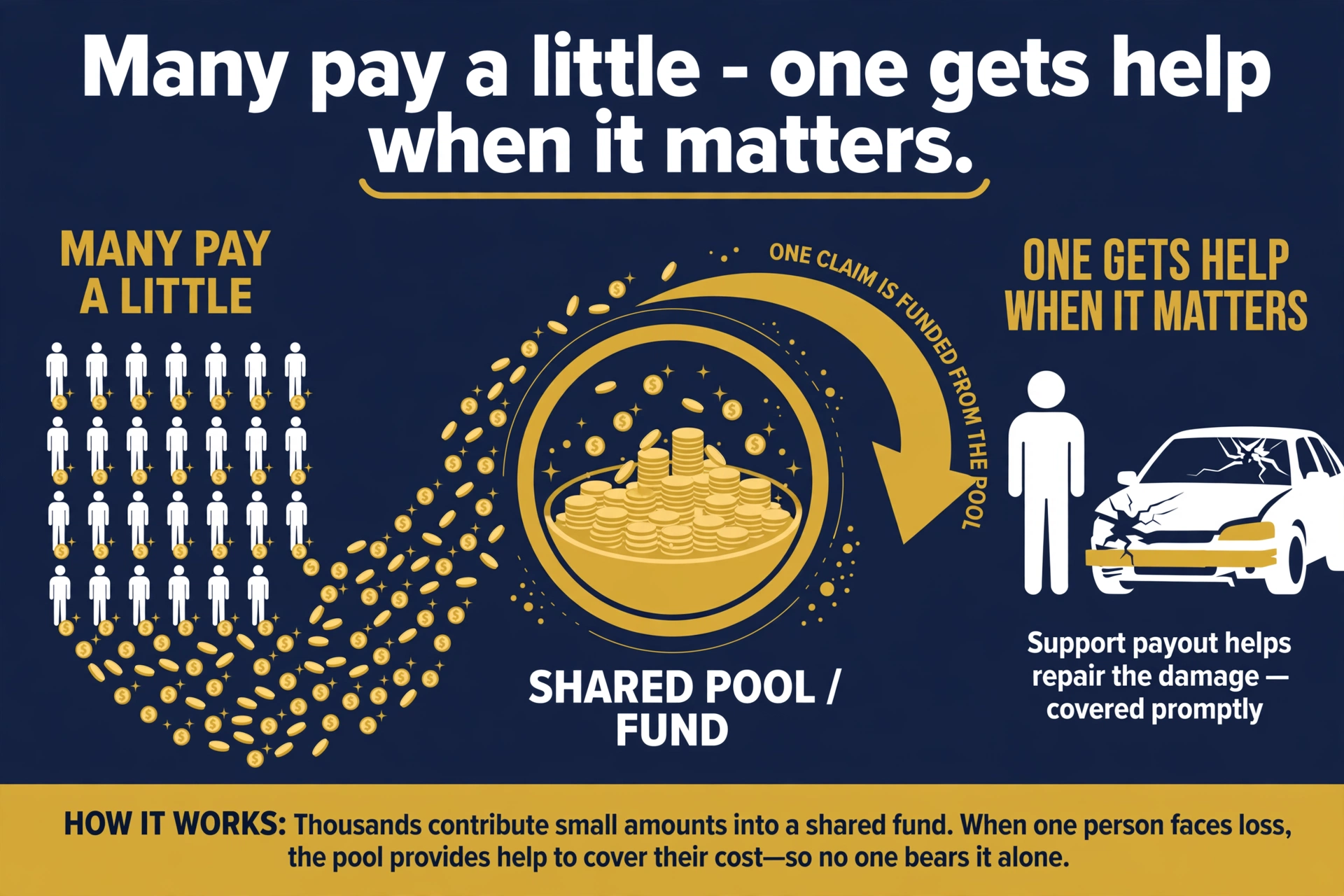
Insurance never covers everything. Policies list exclusions — events or items they will not pay for. A homeowner's policy might exclude floods; a health plan might exclude certain treatments. Knowing your exclusions before disaster strikes is the difference between a policy that protects you and a bill you assumed someone else would pay.
The Main Types You Will Meet
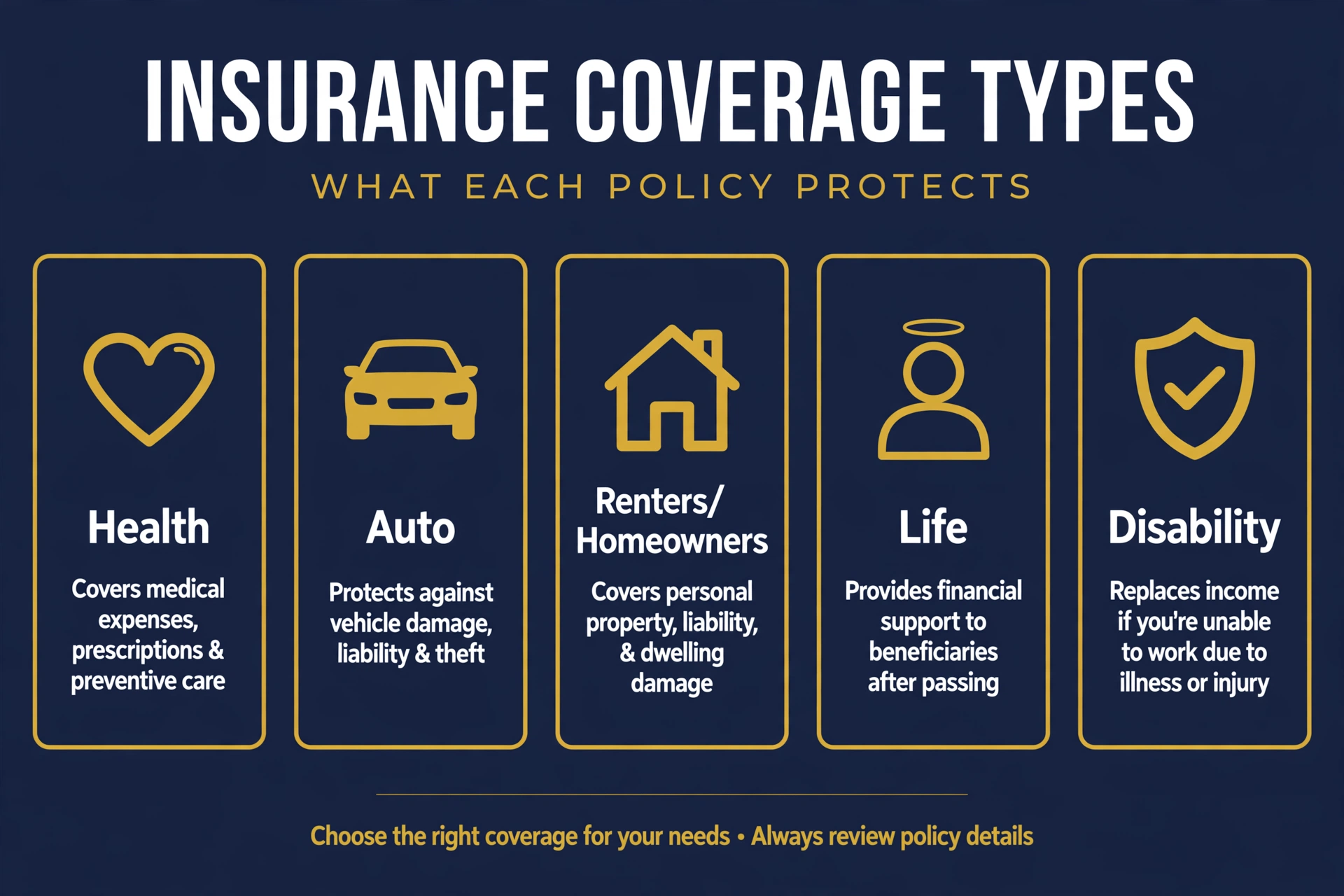
Health insurance pays for medical care — doctor visits, hospital stays, prescriptions. Medical bills are the most common financial disaster a family can face, and a single hospital stay can cost more than a year of pay. Even a basic plan puts a ceiling on what you can owe.
Auto insurance is required by law in nearly every state for drivers. At minimum it pays for injuries and damage you cause to other people and their property. Collision and comprehensive coverage — optional add-ons — help pay for damage to your own car.
Renters insurance covers your belongings inside a rented home if they are stolen or damaged, and it can cover you if someone is injured in your apartment. Homeowners insurance does the same for a house you own, and it also covers the building itself.
Life insurance pays money to the people you choose — your beneficiaries — if you die. It matters most when other people depend on your income: a spouse, children, anyone who would be left without your paycheck.
Disability insurance pays you part of your paycheck if an illness or injury keeps you from working. Your ability to earn is usually your biggest financial asset, and this is the policy that protects it.
How Premiums, Deductibles, and Claims Work
The premium is the price of the policy — the amount you pay each month or each year to keep your coverage active. Pay the premium and the contract stays in force; stop paying and the protection stops with it. This is the first money you spend, and it is gone whether or not anything bad happens.
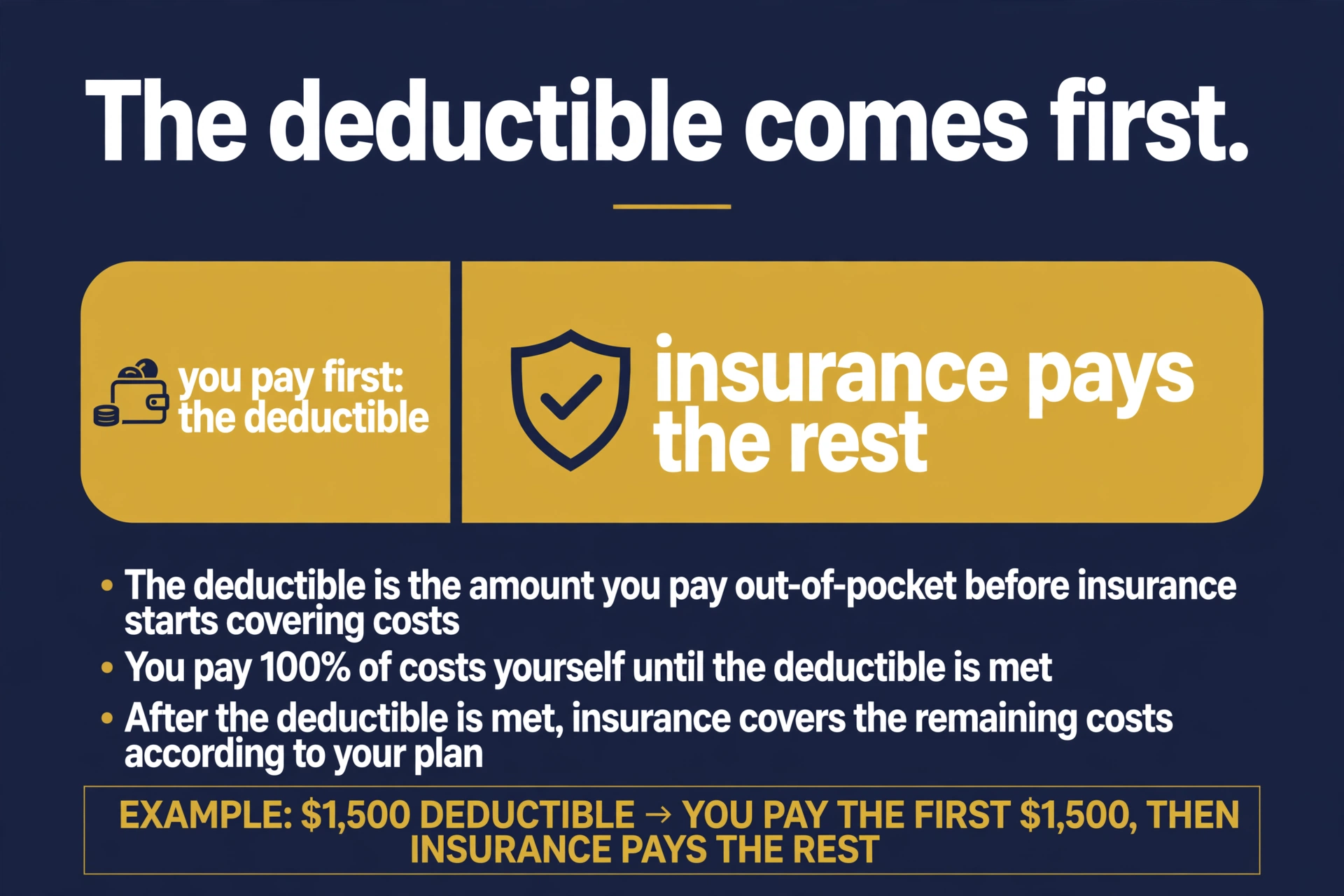
The deductible is the amount you pay out of pocket before the insurance company pays anything on a claim. Say your car repair costs five thousand dollars and your deductible is one thousand. You pay the first one thousand, and the insurer pays the remaining four thousand. Deductibles are why a high-deductible policy costs less each month: the company takes on less risk because you absorb the first slice.
A claim is your formal request for the company to pay. You report what happened, provide documentation, and the company pays what the policy covers. Filing an honest claim is your right — it is what you bought the policy for. Filing a dishonest claim is insurance fraud, and it is a crime that can cost you far more than any payout.
One rule of thumb: never buy a deductible you could not actually pay in a bad month. A high deductible lowers your premium, but it only saves you money if you can cover that first slice when trouble comes. Match the deductible to your savings, not to your wishful thinking.
Avoiding Insurance Scams and Identity Fraud
Honest insurance is sold by licensed companies and licensed agents. Scams usually arrive the same way: an unsolicited call, text, or email offering an amazing policy at an unbelievable price, with pressure to decide right now and pay immediately. Real agents do not demand payment by gift card, wire transfer, or cash, and they never ask you to sign a blank form. If a deal feels too good to be true, check the agent and the company with your state's insurance department before you pay a dollar.
Identity fraud is the other side of the same danger. A thief who gets your name, birth date, and Social Security number can open accounts in your name, file fake insurance claims, and leave you with the wreckage. Guard that information: do not carry your Social Security card in your wallet, do not share personal details with strangers who call you, and use a different strong password for every financial account.
Watch for the warning signs that something is wrong. A bill you do not recognize, a debt collector calling about an account you never opened, or mail about benefits you never applied for can all mean someone is using your identity. Check your free credit reports at least once a year, and if you find fraud, report it to the company involved and to the credit bureaus right away. Speed is everything — the sooner you act, the less damage a thief can do.
Keeping Your Financial Documents Secure
Your financial life runs on paper and files: insurance policies, tax returns, bank statements, birth certificates, property deeds, account logins. If those fall into the wrong hands or are destroyed, recovery is slow and painful. Protecting them is part of protecting your foundation.
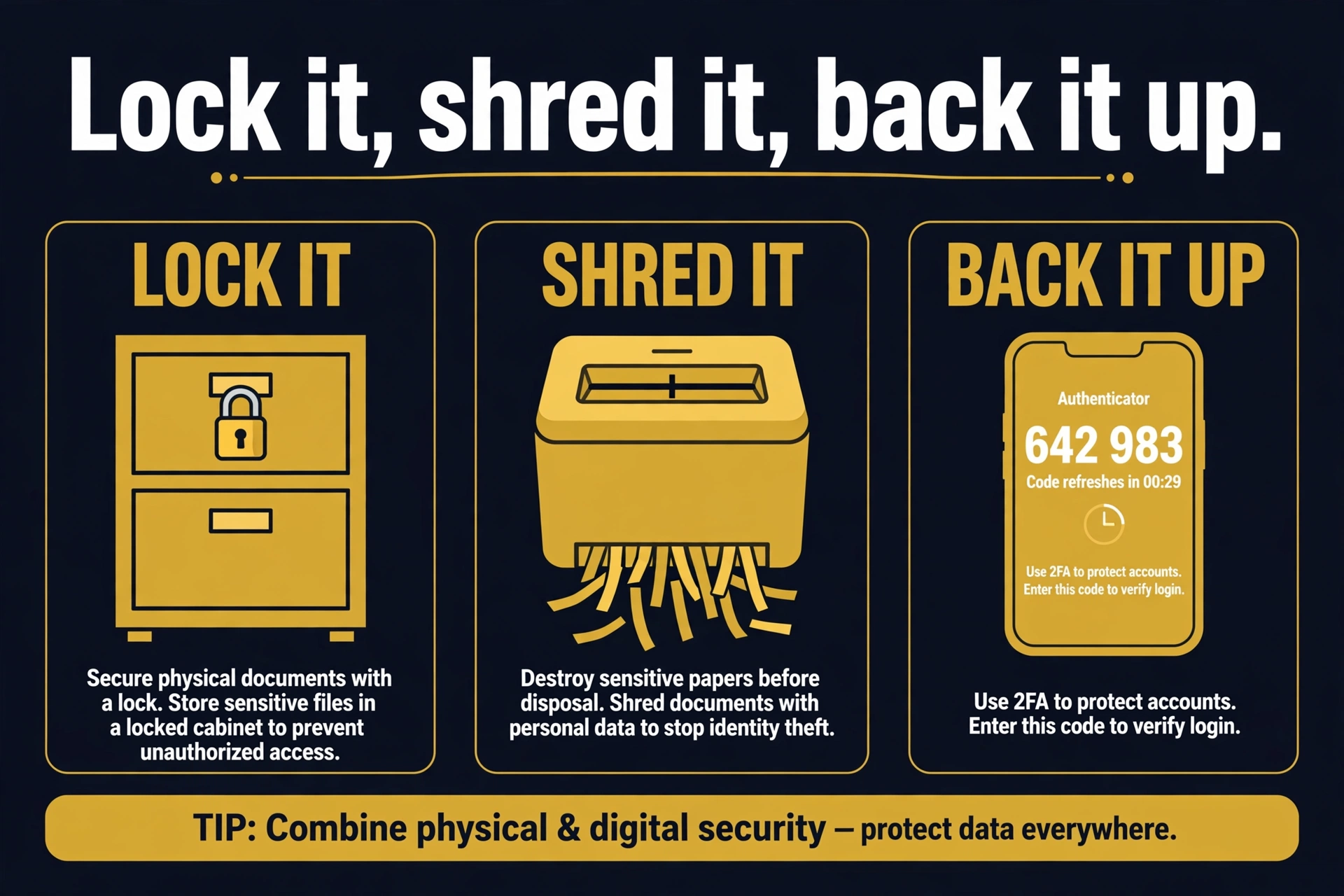
Keep the most important originals — birth certificates, deeds, titles — in a fireproof safe at home or a safe deposit box at the bank. Store digital accounts behind unique passwords and turn on two-factor authentication, which asks for a second code (usually sent to your phone) before anyone can log in. That one step blocks most account break-ins.
Backups are just as important as locks. Keep a copy of every key document somewhere separate from the original — for example, scanned copies stored in a secure cloud account while the originals sit in the safe. Take a home inventory: walk through your home, photograph your belongings, and keep the list with your backups. If you ever file a renters or homeowners claim, that inventory is the proof of what you owned.
Finally, destroy what you no longer need. Old bank statements, expired policies, and outdated tax paperwork should be shredded, not tossed in the trash — your trash is an easy place to steal an identity. Keep what the law or your policy requires, and shred the rest.
Key terms
- Risk pooling
- many people each paying a small amount into a shared fund so the few who suffer big losses get help.
- Policy
- the written insurance contract that spells out what is covered, what is excluded, and how much the company pays.
- Premium
- the regular payment (usually monthly or yearly) that keeps an insurance policy active.
- Deductible
- the amount you pay out of pocket before the insurance company pays anything on a claim.
- Claim
- a formal request asking the insurance company to pay for a covered loss.
- Exclusion
- an event or item the policy specifically does not cover.
- Beneficiary
- the person (or people) chosen to receive a life insurance payout.
- Two-factor authentication
- a login step that asks for a second code, usually sent to your phone, in addition to your password.
- Identity fraud
- someone using your personal information to open accounts or make claims in your name.
What's next
Your foundation is protected. Now comes the question every dollar asks: where do I go? MF-109 "Your Next-Dollar Plan" gives you the Prosper Academy decision tree — a simple step-by-step order for every new dollar: emergency buffer, high-interest debt, the employer match, a fuller emergency fund, and long-term investing.
---
The quiz
Protect the Foundation — Quiz
4 questions · pass with 4 correct
1.What is risk pooling — the idea behind all insurance?
2.A disability insurance policy protects which of your assets?
3.Your car repair costs $5,000 and your deductible is $1,000. How much does the insurance company pay?
4.Which of these is a warning sign of an insurance scam?
Recommended Tools
Hand-picked resources that fit this lesson — only ever one or two, and only when they're genuinely useful.
- Learn more
Experian
Free identity monitoring that alerts you to suspicious activity.
We may earn a commission if you sign up — at no extra cost to you.